
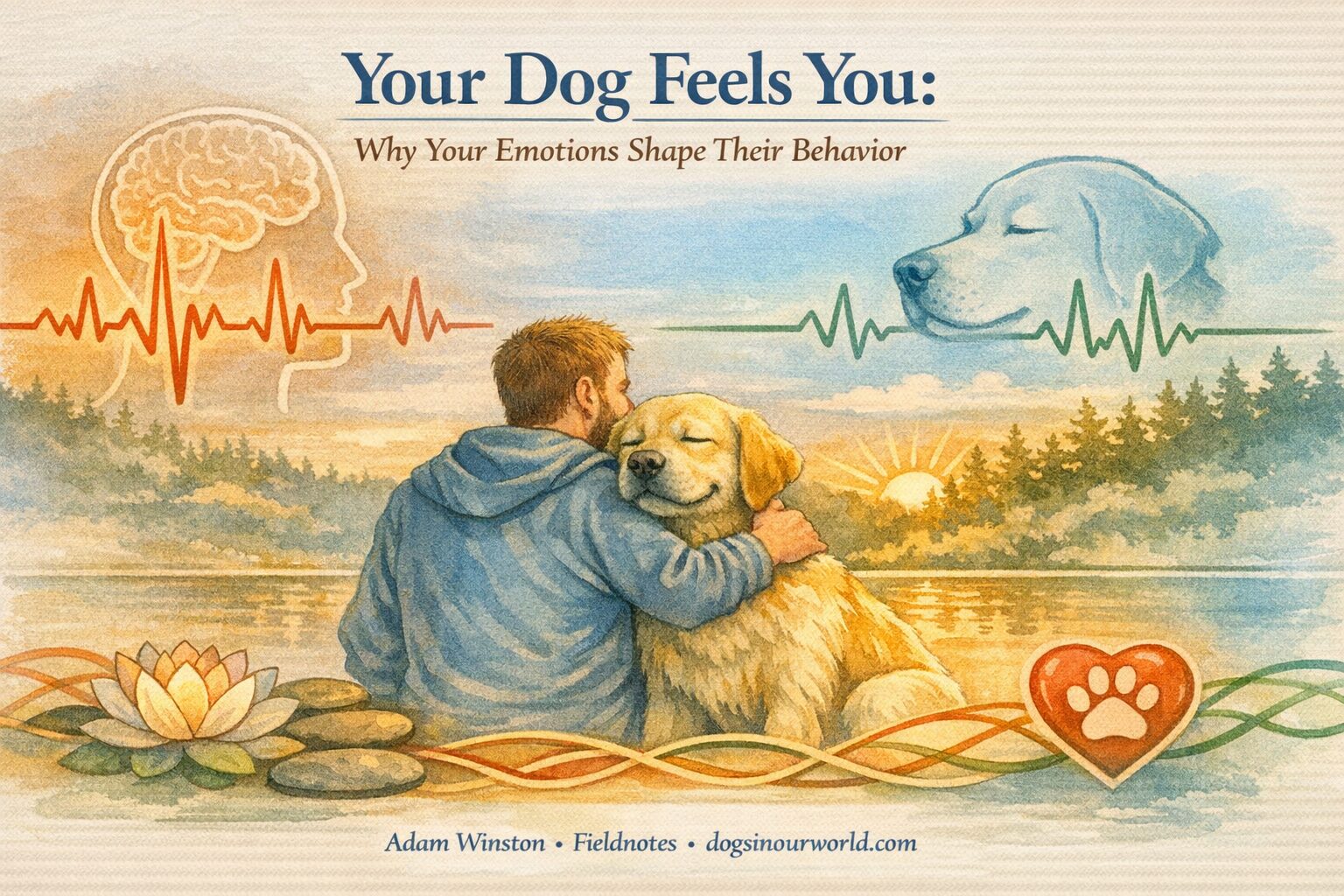
Your Dog Feels You: Why Your Emotions Shape Their Behavior
How My Dog Helps Me Regulate Emotion
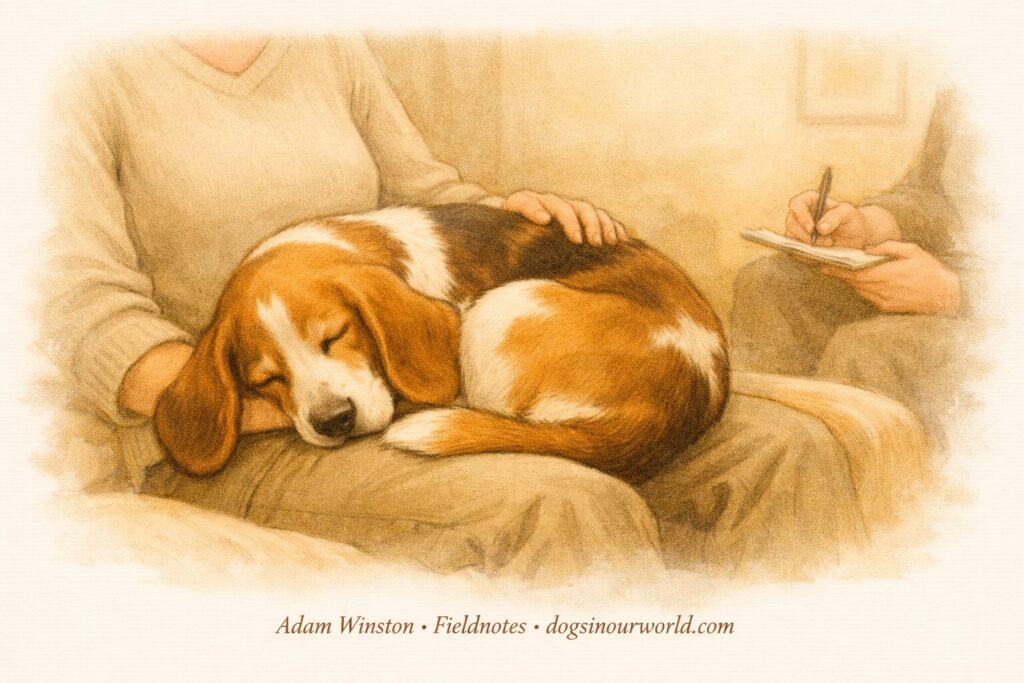
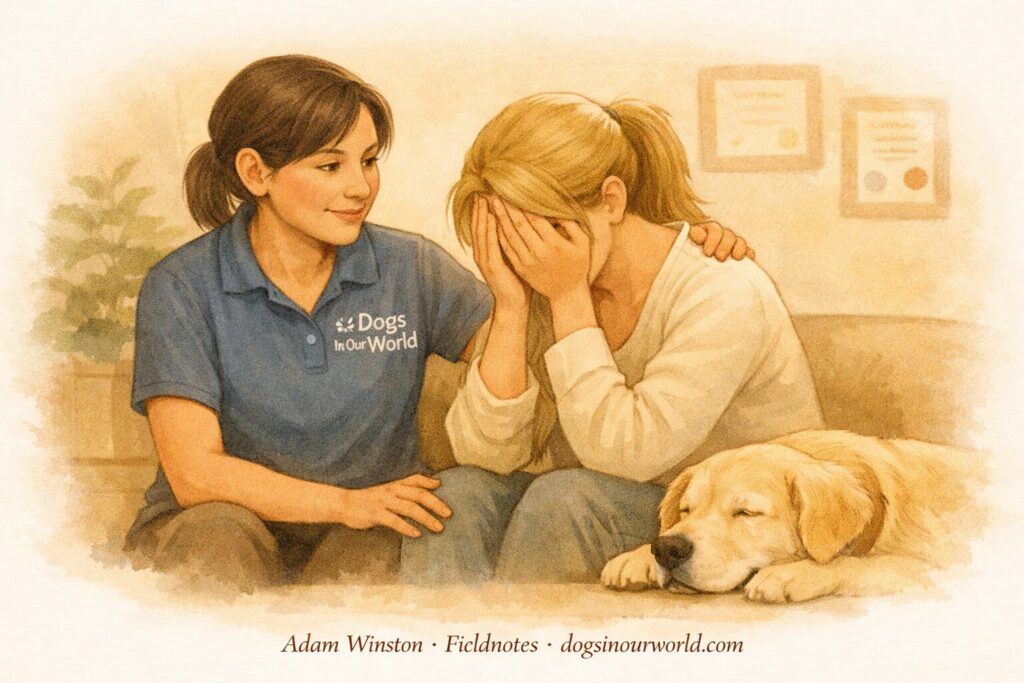
I didn’t fully understand how your emotions affect your dog until my Basset Hound, Gorbi, began quietly regulating me during my weekly therapy sessions.
Every Thursday afternoon, I’d sit on the couch across from my therapist, Bridget Cantrell, ready to do the uncomfortable work of untangling grief, inevitable divorce, identity, and the emotional debris that comes with rebuilding a life. And every Thursday afternoon, Gorbi would climb onto my lap, curl his long body into the shape of a comma, and settle his head against my chest.
He didn’t do this at home. He didn’t do it at the park. He didn’t do it when I was writing or cooking or pacing around the house. He did it here, in this room, during this hour, when my nervous system was most exposed.
Some days, he fell asleep instantly, his breathing deep and slow. Other days, he stayed alert, watching me with soft eyes as if waiting for the moment I needed him most. And on the days when I was holding too much, when my chest tightened or my thoughts spiraled, he would shift his weight, press his body more firmly into mine, and exhale in a way that felt like an invitation.
Come back to yourself. I’m here, too.
That was the moment I realized something simple and profound: Gorbi wasn’t just comforting me. He was reading me. He was responding to the state of my nervous system long before I said a word.
And he’s not unique. Dogs do this every day, with every person they love.
How Your Emotions Affect Your Dog Through the Nervous System
Dog trainers often talk about “energy,” but the science behind it is far more concrete than mystical. Dogs evolved to read human emotional states because their survival depended on it. Long before we had language, dogs watched our posture, our breathing, our micro-expressions, and the subtle tension in our faces, shoulders, and arms.
Today, that evolutionary skill shows up in two related concepts dog professionals call telegraphing and leash telegraphing.
Telegraphing is when a trainer unintentionally communicates their intentions through subtle body movements or gestures before giving a formal cue. For example, reaching into a treat pouch before signaling “sit” can cause a dog to anticipate the cue prematurely.
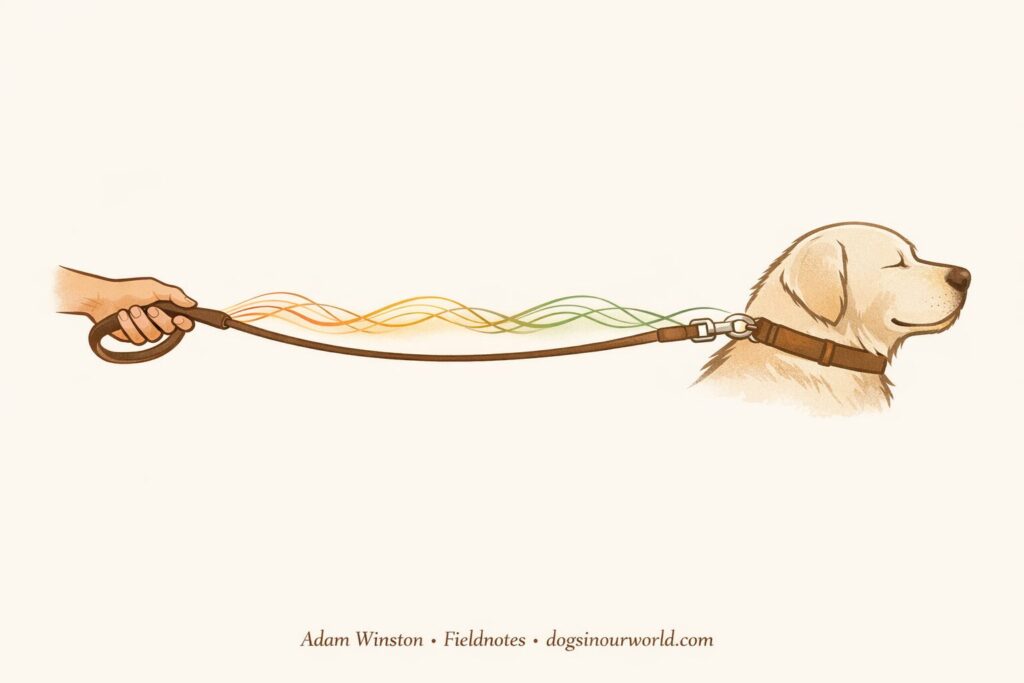
Leash telegraphing is when tension and emotion travel down the leash from handler to dog, transmitting nervous system signals that the dog can feel even without visible cues.
I once worked with a couple whose dog, Bird, began lunging and barking at people. Josh and Lisa, Bird’s owners, complained that Bird could no longer join them at their favorite dog-friendly bar and grille because Bird was reactive to the restaurant staff. Lisa claimed Bird was too reactive, but Josh disagreed.
To understand better, I invited Bird to join us at the restaurant. We chose a quiet picnic table in the dog-friendly backyard and ordered waters. Lisa held Bird’s leash as Bird calmly lay under the table in the shade on a hot summer day.
When a familiar waiter approached, Lisa tightened her grip on the leash. Bird, sensing her tension, growled and lunged at the familiar server, who was gracious and understanding.
Later, I asked Lisa to hand the leash to Josh. Josh dropped the leash to the ground and stepped on it, effectively muting any tension signals. When the server returned, Bird remained calm and napping.
Bird wasn’t just reactive; she was reacting to the emotional signals transmitted through the leash.
This is the nervous system behind the leash. This is how your emotions can affect your dog.
How Dogs Sense and Respond to Human Emotions
Some dogs don’t wait for us to telegraph our emotions; they actively check our emotional state.
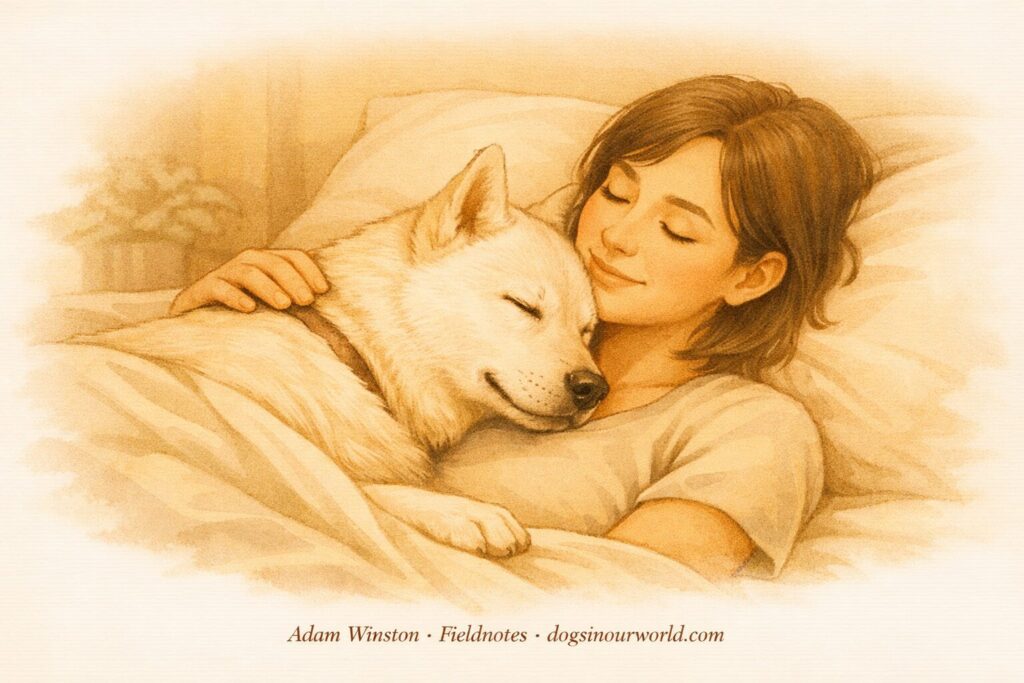
During a virtual session with Song and her Korean Pungsan dog, Vanilla, Song told me something remarkable: every morning, before she gets out of bed, Vanilla walks over, places her head gently on Song’s chest, and waits.
Song believes Vanilla is checking her emotional temperature for the day.
And she’s right.
Dogs perform these “emotional check-ins” because they are attachment-based animals. They want to know: Are you okay? Are we okay? Is the world okay? The answer affects the behavior.
Vanilla’s morning ritual isn’t a trick. It’s a nervous system assessment.
Recent research supports this daily emotional attunement. Studies show that dogs form attachment bonds with their humans similar to those between human children and caregivers, using their acute sensitivity to emotional cues to assess safety and well-being. For example, research published in Psychology Research and Behavior Management highlights how dogs’ attachment styles influence their behavior and emotional responses to their owners.
Moreover, physiological studies reveal that dogs and their owners often experience synchronized heart rate variability during calm interactions, indicating a deep emotional and physiological connection. This co-regulation helps dogs adjust their emotional state in response to their human’s mood, reinforcing the bond and promoting mutual calm.
These findings underscore that dogs’ emotional check-ins are not just affectionate gestures but are rooted in complex attachment systems and physiological synchrony, reflecting a sophisticated emotional partnership.
When Humans Regulate the Room
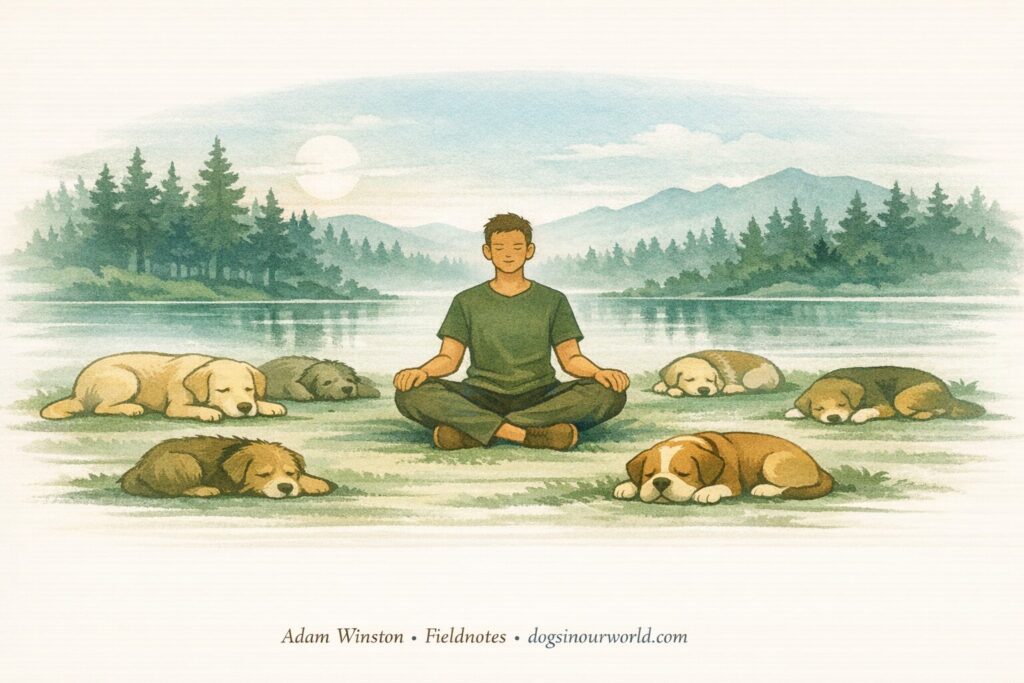
I learned the power of human regulation most clearly while managing the dog pack at the Country Inn Pet Resort & Spa in McCleary, Washington.
Picture a large fenced yard filled with dogs of every size, age, and personality. Some sprinting. Some wrestling. Some barking. Some sniffing. All of them watching me.
When I paced, the pack paced. When I moved quickly, the energy rose. When I stopped and sat down in the center of the yard, something magical happened: the pack settled.
One by one, dogs softened. Some lie down. Some wandered over and curled beside me. Some watched from a distance, their bodies loosening.
I didn’t say a word. I didn’t give a cue. I didn’t ask for obedience.
I regulated myself, and the pack followed.
The same thing happens in group classes. When students arrive stressed from work, running late, or overwhelmed by their dog’s excitement, the room becomes a storm of nervous systems. Before we begin anything, I lead the class through a few slow breaths.
Every time, without fail, the classroom of dogs and people settles.
Because dogs don’t just learn from our words, they learn from our state.
Why Dogs Mirror Human Emotions
I need a dog in my life because they are my living, breathing mood ring.
When I’m pacing too much, Gorbi paces too. When I’m frustrated, he becomes restless. When I’m grounded, he melts into the floor like warm butter.
Dogs don’t just mirror our behavior; they mirror our internal state. They show us what we’re carrying, even when we don’t want to see it.
Sometimes, the most honest reflection of your emotional life is sitting right at your feet.
When Dogs Regulate Us
The relationship goes both ways.
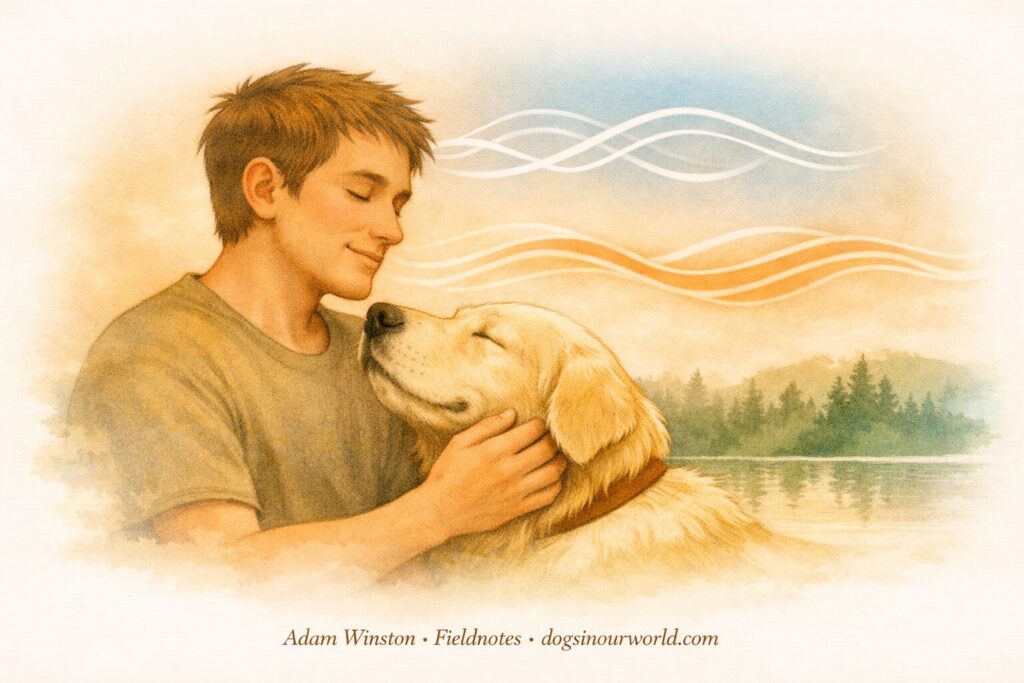
Dogs regulate us just as much as we regulate them.
Gorbi enforces my sleep hygiene with the persistence of a seasoned therapist. If I stay up too late, he makes sure I regret it at 7:30 a.m. sharp. His message is always the same: I need the best version of you tomorrow.
Research shows that calmly petting a dog lowers blood pressure, slows heart rate, and activates the parasympathetic nervous system, the part responsible for rest and recovery.
Therapy dogs demonstrate this beautifully. Ann Howie, a pioneer in the field of dogs in clinical mental health settings, taught me that dogs respond to a client’s emotional state with remarkable accuracy. When a client is calm, the dog may fall asleep on their lap. When a client is anxious or dysregulated, the dog may retreat to their bed in the corner of the office.
Dogs don’t judge our emotions. They respond to them.
The Quietest Lesson: Shelter Dogs and Stillness
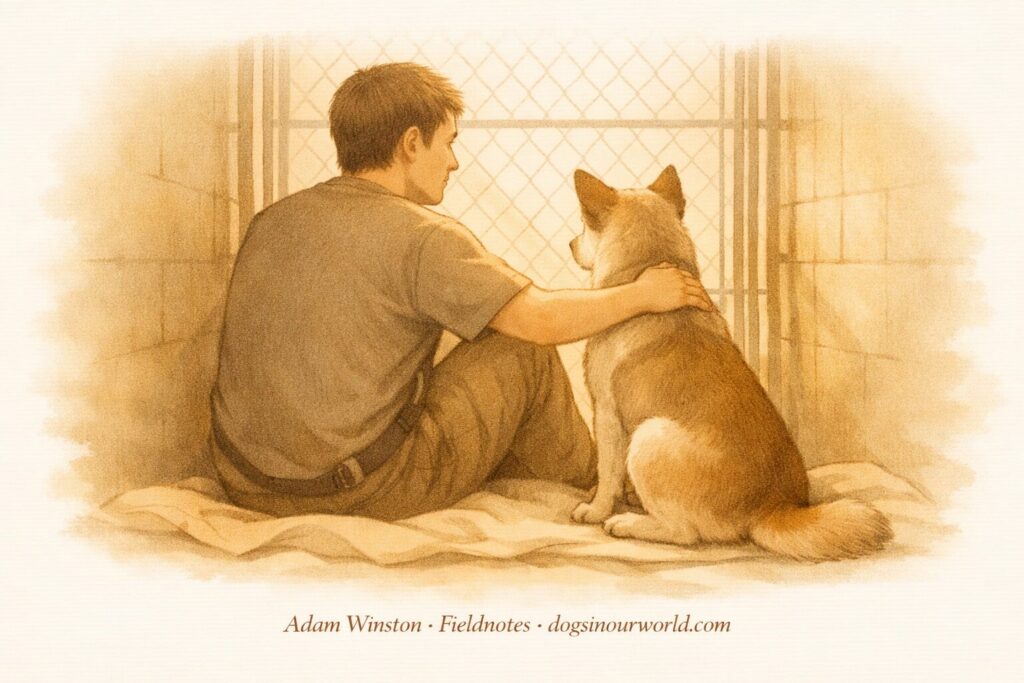
Some of the most powerful lessons I’ve learned about emotional regulation came from shelter dogs.
Many of them arrived frightened, shut down, or overwhelmed. Touch was too much. Words were too much. Movement was too much.
So I sat.
I sat beside them in silence, sometimes for minutes, sometimes for an entire lunch break. No touching. No coaxing. No expectations.
And slowly, their bodies softened. Their breathing slowed. Their eyes shifted from fear to curiosity.
We were regulating each other.
Stillness became our shared language.
Building Emotional Partnership Between Humans and Dogs
Dog professionals, especially those working in municipal shelters and rescue organizations, face a unique emotional challenge. They witness firsthand the extremes of human emotion—fear, anger, grief, and hope—all reflected in the dogs they care for. These professionals must not only manage the dogs’ emotional states but also regulate their own nervous systems to provide calm, consistent support.
Shelter dogs often arrive overwhelmed, anxious, or traumatized, requiring patient, steady regulation from their caregivers. The emotional labor involved in this work is immense, as professionals balance the needs of vulnerable dogs with the realities of limited resources and high-stress environments.
This emotional labor is deeply intertwined with the core theme of this article: the dynamic emotional partnership between dogs and humans. Dog professionals serve as vital regulators, helping dogs navigate their emotional worlds while managing their own internal states to maintain a safe, supportive environment.
Recognizing and honoring this emotional labor is essential to understanding the full scope of what it means to work with the dogs in our world.
Partnership: The Emotional Truth at the Center
At the heart of Dogs in Our World is a simple belief:
Training is a partnership between two nervous systems.
Your dog doesn’t need you to be perfect. They don’t need you to hide your emotions or pretend you’re calm when you’re not. They need you to be aware of your internal state and be willing to regulate it.
Because when you regulate yourself, you give your dog access to their best self.
This is how your emotions affect your dog. This is how dogs learn to trust us. This is how we build a relationship rooted in safety, clarity, and connection.
Your dog isn’t looking for control. They’re looking for connection.
And connection begins with the state of your nervous system.
If this article resonated with you, we invite you to share your thoughts and experiences in the comments below. Join the conversation and connect with others who understand the profound bond between humans and dogs. For more insights and stories, visit the Fieldnotes Hub to learn more about the dogs in our world.

Frequently Asked Questions
It means dogs sense and respond to your emotional state through subtle cues like posture, breathing, and tone. Your internal calm or tension directly shapes how your dog behaves and learns.
Your emotions travel through body language, voice, and even the leash. When you’re anxious or tense, your dog mirrors that energy; when you’re calm, they relax and focus.
Telegraphing happens when a handler unintentionally signals a dog before giving a cue. For example, by reaching for treats before saying “sit.” Dogs read these micro‑movements as emotional and behavioral information.
Leash telegraphing occurs when tension or emotion travels down the leash. A tight grip can communicate stress, while a relaxed hand signals safety and calm.
Yes. Research shows dogs synchronize heart rate and stress levels with their owners. They read facial expressions, tone, and movement to assess emotional safety.
Start by regulating yourself—slow your breathing, soften your shoulders, and loosen your grip on the leash. Your calm nervous system helps your dog’s nervous system settle.
Dogs perform emotional check‑ins to gauge connection and safety. When your dog pauses to look at you or rest near you, they’re assessing how you feel and adjusting their own behavior.
Absolutely. Petting a dog lowers blood pressure and activates the parasympathetic nervous system. Dogs co‑regulate with us, helping restore calm and emotional balance.
Shelter dogs remind us that stillness builds trust. Sitting quietly beside a fearful dog allows both nervous systems to synchronize, creating safety without words.
Practice mindfulness during daily interactions. Notice your breathing, pace, and tone. Small shifts in your emotional awareness can transform your dog’s confidence and focus.
Obedience controls behavior; regulation shapes learning. A calm, emotionally balanced dog can think, focus, and respond far better than one trained through tension or fear.
Training is a partnership between two nervous systems. When you regulate yourself, you help your dog access their best self—creating connection, trust, and lasting calm.

Adam Winston
Dog Trainer • Animal Behaviorist • Science Communicator
Adam is the founder of Dogs in Our World, where he blends science, storytelling, and compassion to help people understand the dogs they love. His work focuses on fear‑based behavior, trust‑building, and the emotional lives of dogs and their humans.
If you’re navigating behavior challenges or want personalized guidance, Adam offers private sessions, AKC evaluations, and education‑focused consultations.




Anytime I hear you talk or read your writing about dogs it always reminds me of how great a companion they really are. Excellent article.