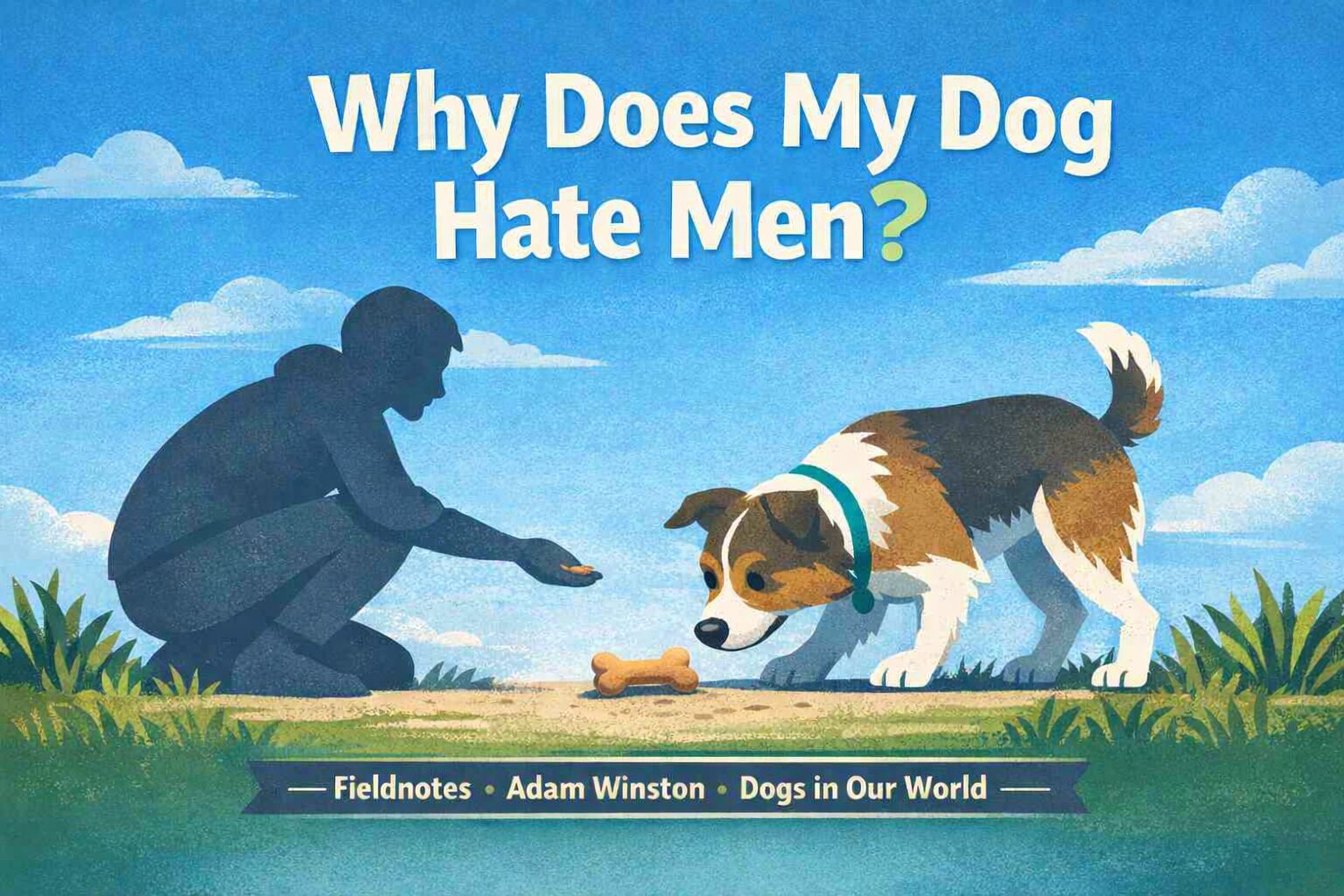
Why Does My Dog Hate Men?
The Question That Echoes in Living Rooms Everywhere
“Why does my dog hate men?”
I’ve heard this question in living rooms, backyards, apartment hallways, and veterinary waiting rooms more times than I can count. Sometimes it’s whispered with embarrassment. Sometimes it’s blurted out with frustration. And sometimes it’s asked with a kind of quiet heartbreak. The feeling that comes from wanting to understand a dog you love, but also feel like you’re missing something important.
I’ve even asked it myself.
Recently, I stood in a neighbor’s living room while a small, trembling dog pressed herself behind her owner’s legs, peeking out at me like I was a threat. I wasn’t doing anything unusual. Just standing there, speaking softly, offering space — but her fear was unmistakable. Her owner sighed and said the line I’ve heard a thousand times:
“She just hates men.”
But here’s the truth:
Dogs don’t hate men.
They don’t hate women, either.
They don’t hate groups of people based on identity.
Dogs don’t experience “hate” the way humans do. They experience safety, uncertainty, comfort, fear, and association. When a dog avoids, barks at, or reacts fearfully toward men, it’s not prejudice. It’s communication.
This article isn’t here to judge anyone or shame anyone. It’s here to offer clarity, compassion, and a myth-busting look at what’s really going on when a dog seems to “hate men.” Because once we understand the behavior, we can help our dogs feel safer, more confident, and more connected to the world around them.
Mislabeling Dogs as “Hating Men” and Its Consequences
When someone tells me their dog “hates men,” there’s usually a story behind it. A moment when the dog barked, growled, hid, or froze in response to a husband, son, or neighbor entering the room. And because humans are storytellers by nature, we try to make sense of that moment. We reach for explanations that feel emotionally true.
One of the most common assumptions is:
“She must have been abused by a man.”
Sometimes that’s accurate.
Often, it’s not.
And when we jump to that conclusion too quickly, we can unintentionally create more problems for the dog.
The Hidden Cost of Mislabeling
When an owner believes their dog “hates men,” a few things can happen:
- They become anxious around men themselves, anticipating a reaction.
- Dogs pick up on that anxiety instantly.
- They avoid exposing the dog to men entirely, which prevents healthy socialization.
- They interpret normal fear signals as hostility, which can lead to frustration or punishment.
- They tell men to “just pet or hold her, she needs to get used to it,” which often makes the fear worse.
In some cases, the owner’s fear becomes the dog’s fear.
In others, the dog’s fear becomes the owner’s fear.
And the cycle reinforces itself.
Why the Label Matters
Essentially calling a dog “sexist,” “hateful,” or “prejudiced” oversimplifies what is actually a complex emotional and behavioral pattern. It also places blame where it doesn’t belong — on the dog – on men.
Dogs are shaped by:
- Safety cues
- Past experiences
- Socialization gaps
- Genetics and temperament
- Human emotional states
- Environmental context
None of these are moral failings.
None of these are character flaws.
They’re simply the ways dogs navigate the world.
When we shift from “my dog hates men” to “my dog feels unsafe around men and/or new people,” everything changes.
We move from judgment to understanding.
From frustration to compassion.
From confusion to a plan.
Mislabeling a dog’s fear as hate can accidentally reinforce the very behavior we’re trying to change.
The Myth: Why We Jump to “Hate”
The idea that a dog “hates men” is one of those myths that feels emotionally true but scientifically false. It’s a story we tell ourselves because we’re trying to make sense of a moment that feels personal. When a dog barks at a man but not a woman or hides from a male visitor but not a female one, it’s easy to assume the dog is making a judgment about gender. This is why so many people ask, ‘Why does my dog hate men?’ even when the behavior isn’t rooted in hate at all.
But dogs don’t think in those terms.
Dogs think in patterns, associations, and sensory impressions.
They notice:
- The depth of a voice
- The size of a body
- The speed of a movement
- The direction of eye contact
- The energy someone brings into a room
These cues can feel very different coming from men versus women. Especially, to a dog who hasn’t had enough positive exposure to men during early development.
So why do we jump to the word “hate”?
Because language shapes interpretation.
“Hate” is a human word for a human emotion. It’s dramatic. It’s memorable. It feels like a complete explanation. But it also shuts down curiosity. It stops us from asking the more important question:
What is my dog trying to tell me?
When we use human emotional labels, we risk missing the real messages: the dog’s body language, fear signals, and attempts to communicate discomfort. And when we misinterpret fear as hostility, we might respond with frustration instead of empathy.
The Power of Reframing
When we move beyond the idea of “hate” and instead recognize fear or timidity, the path forward becomes clearer.
Timidity can be eased.
Fear can be gently desensitized.
Anxiety can be healed.
Timidity can give way to trust.
In contrast, “hate” feels fixed, like an unchangeable trait rather than a temporary response.
Mistaking a dog’s fear for hate can unintentionally strengthen the very behaviors we want to change.
The Science: What Research Tells Us About Dogs and Men
When we zoom out from the emotional story and look at the science, a clear pattern emerges:
Dogs who react fearfully to men are usually responding to differences in exposure, body language, and sensory cues, not gender itself.
Here’s what the research and clinical experience consistently show:
Early Socialization Shapes Comfort Levels
Puppies go through a critical socialization window between 5 and 16 weeks. During this time, positive exposure to a wide variety of people, including men, helps build a dog’s confidence later in life.
If a puppy grows up with mostly women around, or has limited exposure to men during this window, men may feel unfamiliar or unpredictable.
Unfamiliarity often reads as unsafe in a dog’s nervous system.
Many people tend to:
- Walk with heavier footfalls or louder steps
- Use varying voice tones, from deep to high
- Make direct or sustained eye contact
- Approach with different stride lengths
- Lean forward or move closer when greeting a dog
- Use varied upper body movements
To a sensitive or under-socialized dog, these cues can feel intense.
Genetics and Temperament Play a Role
Genetics and temperament are foundational to understanding why some dogs react fearfully or cautiously, including toward men. Dogs inherit many aspects of their personality from their genetic makeup, which interacts with their life experiences to shape behavior.
Research highlighted in a recent CBS News 60 Minutes segment explores how dogs evolved to be “survival of the friendliest,” emphasizing the role of genetics in friendliness and temperament. This research, led by evolutionary biologist Dr. Brian Hare at Duke University, shows that dogs’ social behaviors have deep genetic roots that influence how they respond to humans.
During my studies in Applied Animal Behavior at the University of Washington, Professors James Ha and Renee Ha emphasized that a dog’s temperament is often inherited from their mother. Professional animal behaviorists view an animal’s “personality” as a blend of genetic temperament and life experience, nature and nurture working together.
A dog with a genetically timid or sensitive temperament may be more prone to fearful reactions to unfamiliar stimuli, including men. However, this does not mean dogs are “genetically hateful.” Rather, their responses are stress reactions that can be softened or reshaped through positive experiences and training.
Understanding genetics and temperament allows trainers and behaviorists to tailor interventions that help dogs build confidence and trust, even if they start with a more cautious disposition.
Past Experiences Matter, But Not Always in the Way People Think
A dog doesn’t need to be abused by a man to fear men and new people.
Sometimes:
- A loud male voice startled them once.
- A tall man reached over their head too quickly.
- A man wearing a hat bent down too fast.
- A male vet tech handled them during a stressful procedure.
The dog’s brain stores these moments as data points, not moral judgments.
Dogs Read Emotional States, Including Ours
From a psychological perspective, dogs are experts at reading human tension. If an owner becomes anxious around men because they’re anticipating a reaction, the dog may interpret that anxiety as a warning.
In other words:
The dog isn’t afraid of men. The dog is afraid because the owner is afraid.
This is not the owner’s fault.
It’s simply how emotional contagion works between species.
Fear in dogs is rarely about gender. It’s about unfamiliarity, intensity, and emotional context.
Adam Winston – Dogs in OUr world
Practical Steps: Helping Your Dog Feel Comfortable Around Men
When working with dogs who react fearfully or timidly toward men, safety is paramount. Dogs with a history of bites or overly aggressive behavior require guidance from an experienced, certified trainer or behaviorist.
Here is a step-by-step exercise I coach with clients facing “man-hating” dog challenges:
1. Gather Necessary Items:
- A friendly, calm, and confident man (or any person the dog reacts fearfully or timidly towards)
- High-value food treats (cooked steak, chicken, almond butter, cheese)
- A standard 6-foot leash attached to the dog’s collar or harness
- An open, quiet space such as a backyard, park, or cleared garage
2. Position the Volunteer:
The human volunteer sits on the ground cross-legged or in a low chair if sitting on the ground is not physically possible.
3. Start at a Comfortable Distance:
The handler and their leashed dog begin at a distance comfortable for the dog. The dog may notice the volunteer, but is not triggered.
4. Volunteer Offers Food Calmly:
The volunteer remains stationary, calm, and quiet, offering high-value food in an outstretched hand, perhaps with a gentle call or soft “kissy” sound to encourage the dog.
5. Handler and Dog Circle Slowly:
The handler and dog walk casually in a wide circle around the seated volunteer, who continues to calmly present food.
6. Gradually Close the Circle:
As the dog shows signs of relaxing, the handler slowly tightens or closes the circle, allowing the dog to choose whether to approach.
7. Allow the Dog to Choose:
The dog is never forced to approach; choice is key. The dog-handler team continues circling until the dog shows interest or relaxation.
8. Respect the Dog’s Pace:
If the dog needs more time, the volunteer leaves the food for the dog, then walks away. The exercise can be repeated the next day. There is no need to force practice or pressure the dog.
This exercise builds trust through calm, positive associations and respects the dog’s emotional boundaries. The ultimate goal is for the dog to voluntarily and freely eat the tasty treats offered. Make it a buffet if you need to! Encouraging the dog to choose to eat at their own pace reinforces trust and comfort.
If progress stalls or the dog shows increasing signs of distress, seek professional support.
Building trust with a fearful dog is about honoring their choices — not forcing change.
Adam Winston – Dogs in our world
Real World Stories: What Dogs Teach Us About Fear and Trust
Every dog who struggles with men has a story.
Some are simple.
Some are layered.
Some are heartbreaking.
All of them are deeply human.
Here are a few example cases that are personal to me, offering a glimpse into the work I’m doing with the Florence, Arizona community, including the recently adopted Meka and her new parents.
Meka: The Dog Who Taught Me to Slow Down
Meka, my newest “God Dog,” is one of the most emotionally intelligent animals I’ve ever known. She isn’t afraid of men, but she’s sensitive to energy. If someone enters the room, she’ll pause, assess, and decide whether she feels safe.
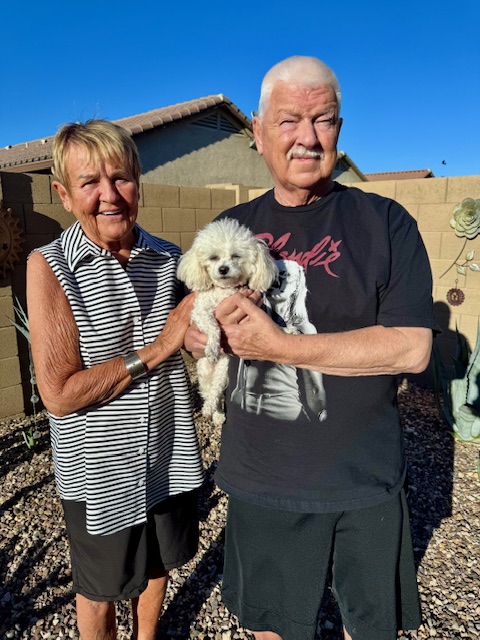
Meka with her loving family, learning to feel safe and understood.
I first met Meka when her mom reached out, concerned that Meka “hated men.” To better understand Meka, I brought my 70-year-old aunt, who is an experienced dog handler, to meet Meka and her family. Surprisingly, Meka was just as fearful and quick to flee from my aunt as she was from me. It soon became clear that Meka had only met her dad since being adopted.
This experience reminded me of something essential:
Dogs don’t judge men. They judge moments.
And moments are shaped by energy, movement, tone, intention, and experience.
Meka reminded me that dogs are always gathering data.
Always observing.
Always deciding what feels safe.
Her wisdom shows up in every case I work with.
I visit Meka once a week, sitting quietly on the floor with treats.
No reaching.
No talking.
No pressure.
Within a few visits, Meka now comfortably naps nestled along with her dad and even lets me hold her!
I’m proud to say that I’m also officially Meka’s Godfather! But that’s a story for another time.
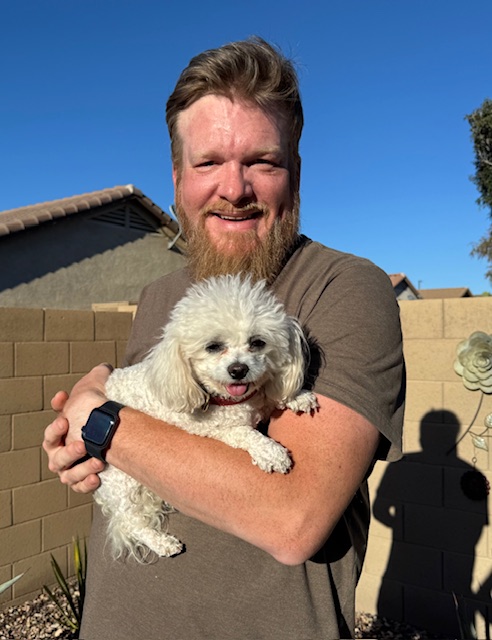
A sunny moment with Meka during weekly visits, building trust one treat and cuddle at a time.
Case Story #1: The Shelter Dog Returned for “Hating Men”
Some dogs carry stories we misread at first glance, and this little one was no exception.
I remember working the front desk at a large municipal shelter when a woman returned a small dog she had adopted, saying, “The dog hates men.”
As I opened the dog’s original folder and case file on my computer, I realized that I was the one who had cared for and processed this little dog for adoption.
The dog was happy to transfer from the woman’s arms to mine over the front desk, clearly more comfortable with me than with her adopter.
This ironic moment reminded me how often dogs are misjudged and mislabeled.
Many dogs labeled as “man-hating” are actually fearful due to a lack of socialization or past experiences, not hatred.
Mislabeling can lead to genetically timid dogs cycling through shelters unnecessarily, missing out on the right home and support they need.
Understanding each dog’s unique history and needs is key to helping them find suitable homes and build trust with all people, regardless of gender.
Case Story #2: The Dog Who Feared Men Because His Owner Did
Sometimes a dog’s fear isn’t theirs alone. It’s a reflection of the person they trust most.
Another client had a dog who growled at men on walks.
After observing the pair together, it became clear that the dog wasn’t the only one feeling tense.
The owner had a history of trauma involving men.
Her body stiffened whenever a man approached.
Her breathing changed.
Her pace quickened.
The dog wasn’t reacting to men. He was reacting to her fear.
Once we addressed the emotional contagion between them, the dog’s behavior improved dramatically.
Dogs don’t just read our body language; they absorb our emotional states.
Case Story #3: The Shelter Dog with a Startle History
A single startling moment can echo through a dog’s life until someone helps rewrite the memory.
A large mixed-breed dog I worked with had a history of being startled by loud noises.
One day at the shelter, a male volunteer accidentally dropped a metal bowl near him.
The dog panicked.
From that moment on, he reacted fearfully to that volunteer, and eventually to other men who resembled him.
Not because of gender.
Because of association.
Once we identified the trigger, we rebuilt trust through slow, predictable exposure and positive reinforcement — including switching to a plastic bowl and plenty of hand feeding.
Every dog has a story. Every story deserves compassion. Every moment of progress, no matter how small, is worth celebrating.
Conclusion: Moving Beyond “Hate” to Understanding and Healing
When someone tells me, “My dog hates men,” I know what they’re really saying is, “My dog is struggling, and I don’t know why.” It’s a vulnerable admission. It’s an invitation to look deeper. And it’s the first step toward helping a dog feel safe in a world that sometimes feels overwhelming.
The truth is simple but powerful:
Dogs don’t hate men.
Dogs communicate fear, uncertainty, and unmet needs.
When we shift our language, we shift our mindset.
When we shift our mindset, we shift our approach.
And when we shift our approach, we create space for healing.
Fear-based behavior isn’t a character flaw.
It’s not stubbornness.
It’s not defiance.
It’s not a moral judgment.
It’s a dog saying, “I don’t feel safe yet.”
And “yet” is the most important word in that sentence.
Because with patience, empathy, and the right strategies, dogs who are wary of men can learn to feel safe. They can build new associations. They can form new relationships. They can rewrite their stories.
I’ve seen it happen in living rooms, shelters, backyards, and training sessions across the country. I’ve seen dogs who once trembled at the sight of a man eventually curl up beside one. I’ve seen owners who once felt helpless become confident advocates for their dogs’ emotional needs. I’ve seen fear give way to trust: slowly, gently, beautifully.
Your dog is not broken.
Your dog is not hateful.
Your dog is not judging men.
Your dog is communicating.
And now you know how to listen.
Author’s Note
If you’re reading this because your dog struggles around men, I want you to know something important: you’re not alone, and you’re not failing. Fear-based behavior can feel confusing, embarrassing, or even isolating. It’s far more common than most people realize.
Every dog has a story.
Every story deserves compassion.
And every moment of progress, no matter how small, is worth celebrating.
Thank you for caring enough to learn, to question, and to support your dog with empathy. That choice alone makes you the kind of human dogs in our world need more of.
If you want personalized guidance or support, I’m here to help. Whether you’re navigating fear-based behavior, socialization challenges, or simply want to deepen the bond with your dog, reach out. Together, we can create a plan that respects your dog’s unique needs and helps build trust and confidence.
Let’s work together to rewrite your dog’s story — one positive moment at a time.
This article and its insights are brought to you by Adam Winston. Dog trainer, animal behaviorist, and science communicator. For more resources, articles, and support, visit dogsinourworld.com/fieldnotes-hub/
Frequently Asked Questions
Dogs don’t actually hate men. They often react out of fear or uncertainty due to lack of socialization, past negative experiences, or sensitivity to men’s physical traits like deeper voices and larger size.
Sometimes, but not always. Fear can stem from many factors including limited exposure during puppyhood or startling experiences, not necessarily abuse.
Puppies have a critical socialization window between 3 and 14 weeks. Positive exposure to a variety of people, including men, during this time helps build lifelong confidence.
Dogs respond to sensory cues like voice pitch, body size, and movement. Men often have deeper voices and larger frames, which can feel unfamiliar or intimidating to some dogs.
Yes. Dogs are sensitive to human emotional states. If an owner is anxious or fearful around men, the dog can pick up on this and mirror the fear.
Use gradual desensitization and positive reinforcement with calm, confident men offering treats at a comfortable distance, allowing the dog to approach at their own pace.
No. Forcing interaction can increase fear and mistrust. Respect your dog’s pace and choices to build trust.
Yes. Some dogs inherit more timid or sensitive temperaments, which can make them more prone to fear reactions.
Seek guidance from a certified professional trainer or behaviorist, especially if there is a history of biting or aggression.
Yes. Many people assume dogs “hate” men or are aggressive, but often the behavior stems from fear and can be managed with patience and training.
Absolutely. With consistent, positive experiences and support, many dogs learn to feel safe and comfortable around men.
Consult professional trainers, behaviorists, and trusted resources like Dogs in Our World for guidance tailored to your dog’s needs.

Adam Winston
Dog Trainer • Animal Behaviorist • Science Communicator
Adam is the founder of Dogs in Our World, where he blends science, storytelling, and compassion to help people understand the dogs they love. His work focuses on fear‑based behavior, trust‑building, and the emotional lives of dogs and their humans.
If you’re navigating behavior challenges or want personalized guidance, Adam offers private sessions, AKC evaluations, and education‑focused consultations.