
How to Decode Dog Communication: Stress, Affection, and Social Signals Explained
Introduction
Understanding how dogs communicate is essential for building stronger, more empathetic relationships with our canine companions. Despite the abundance of popular beliefs about dog behavior, many common assumptions fall short of scientific accuracy. This article aims to bridge that gap by decoding the subtle and complex ways dogs express stress, affection, and social signals through their body language and vocalizations. By gaining insight into these communication cues, owners and trainers can better respond to their dogs’ needs, improving welfare and deepening bonds.
The Science of Canine Communication
The way dogs communicate emotionally is a fascinating and fast-evolving area of study. Dogs use a rich blend of body language and sounds to share their feelings and intentions. Key signals to watch for include ear position, tail wagging, lip licking, panting, eye contact, and overall posture. For instance, a relaxed, wagging tail often means happiness, but the speed and height of the wag can tell a different story. Vocalizations like barks, whines, and growls also carry varied meanings depending on the situation, pitch, and length.
Breed and environment play a big role in how dogs express themselves. Some breeds, members of what is called the Primitive or Ancient breed group—like the Alaskan Malamute, Shar-Pei, Shiba Inu, Saluki, Chow Chow, Akita, Basenji, Siberian Husky, and Afghan Hound—have their own unique “dialects.” These dogs might bond closely with one person and often show fewer obvious stress signals before reacting, sometimes with defensive or aggressive behaviors. Because they can be less trainable, early socialization and careful management are key to living well with these breeds.
Research shows that ancient breeds developed their distinct ways of communicating because they historically worked independently in tough environments, relying on subtle signals and self-reliance. Owners who learn to read these breed-specific cues can better understand their dogs and avoid misunderstandings that might cause problems.
For example, my first dog, “Roady” the Chow Chow, perfectly illustrated these traits. Roady loved his weekly trips to the dog park, but unlike many dogs, he preferred to patrol the park’s perimeter rather than engage in typical play. His calm, watchful presence and unique social style reflected the subtle, independent communication typical of ancient breeds. Roady also demonstrated remarkable conflict management, once stepping in to defuse a near fight without overt aggression, showing how these breeds communicate with a blend of restraint and assertiveness.
A wagging tail alone doesn’t always mean a dog is happy.
Adam Winston – Dogs in Our world
Stress Signals in Dogs
Dogs communicate stress through a variety of subtle and overt signals that owners can overlook. Recognizing these signs early can prevent escalation and improve welfare. Common stress signals include lip licking, yawning, panting, avoidance, and a tucked tail. Vocalizations such as whines or low growls may also indicate discomfort or anxiety. Body posture changes, like cowering or stiffening, further reveal stress levels.
One key point I emphasize when teaching about stress signals is the importance of looking at more than a single behavior. For example, a wagging tail alone doesn’t always mean a dog is happy. I look for a combination of signals—like a wagging tail paired with pinned-back ears, an open mouth, and a relaxed body—to interpret true happiness.
Conversely, a growl doesn’t always mean a dog is upset. Some dogs growl during play or chasing games. But if a growl comes with a stiff body, tight mouth, or a tucked tail, it’s a clear sign of stress or discomfort, and it’s time to remove the stressor.
Some dog behaviors can be harder to read. Shane “the Dog Dude” Anderson, a professional trainer in Florence, AZ, reminded me of one: when a dog “offers their belly.” Many assume this means the dog wants attention or affection. But it can also signal stress, anxiety, or discomfort. A dog lying on its back with belly and paws pushing away may be telling another dog that play is too rough. This behavior can be a “freeze” response in the fight, flight, or freeze spectrum. Watching this alongside other signals helps you know when a dog needs space—or gentle reassurance.
It’s always best to watch for multiple signs of stress rather than relying on just one. This helps owners respond more accurately and better support their dogs.
It’s always best to watch for multiple signs of stress rather than relying on just one.
Adam Winston – Dogs in OUr world
Understanding the context is crucial, as some signals may overlap with other emotional states. For example, yawning can indicate tiredness or stress depending on the situation. Owners can respond by providing a calm environment, removing stressors, or using reward-based training to reassure their dogs.
Practical tips for recognizing stress include observing baseline behavior, noting changes during interactions, and learning breed-specific stress cues. Early intervention helps prevent chronic stress, which can lead to behavioral problems and health issues.
Expressions of Affection and Bonding
Dogs show their affection in many ways that tell us they trust and feel comfortable with us. One of the clearest signs I look for is when a dog chooses to sit near me with their back turned. I call this “offering their back.” It’s a big sign of trust. I also love it when dogs pin their ears back gently while asking for attention or affection.
There are a lot of old myths about dog behavior that still float around. For example, some people still think that when dogs look directly in our eyes, it means they’re trying to dominate us. I had a customer once who was shocked when I asked his young black Lab to give me gentle eye contact. He said his previous trainer told him to discourage eye contact because it meant dominance.
I always tell people the opposite: gentle eye contact is how dogs show they’re paying attention and connecting with us. In fact, teaching dogs to offer calm, focused eye contact is one of the first things I cover in my group classes.
Eye contact is especially important. While in some situations direct eye contact can be a challenge, in bonding and training it’s a powerful way to build connection and understanding. When guardians of the dogs in our world learn to recognize and respond to these affectionate signals, it deepens their relationship and supports emotional well-being.
Dogs also show affection through gentle licking, leaning into their owners, relaxed body posture, and soft vocalizations. Physical touch, like petting and cuddling, helps build and reinforce these bonds.
Social Signals and Canine Interaction
Dogs use a rich array of social signals to communicate with both other dogs and humans. Play signals, such as play bows and exaggerated movements, invite friendly interaction and help establish positive social bonds. Calming signals, including lip licking, yawning, and turning away, serve to diffuse tension and avoid conflict in social settings. Understanding these signals is crucial for interpreting canine intentions and preventing misunderstandings.
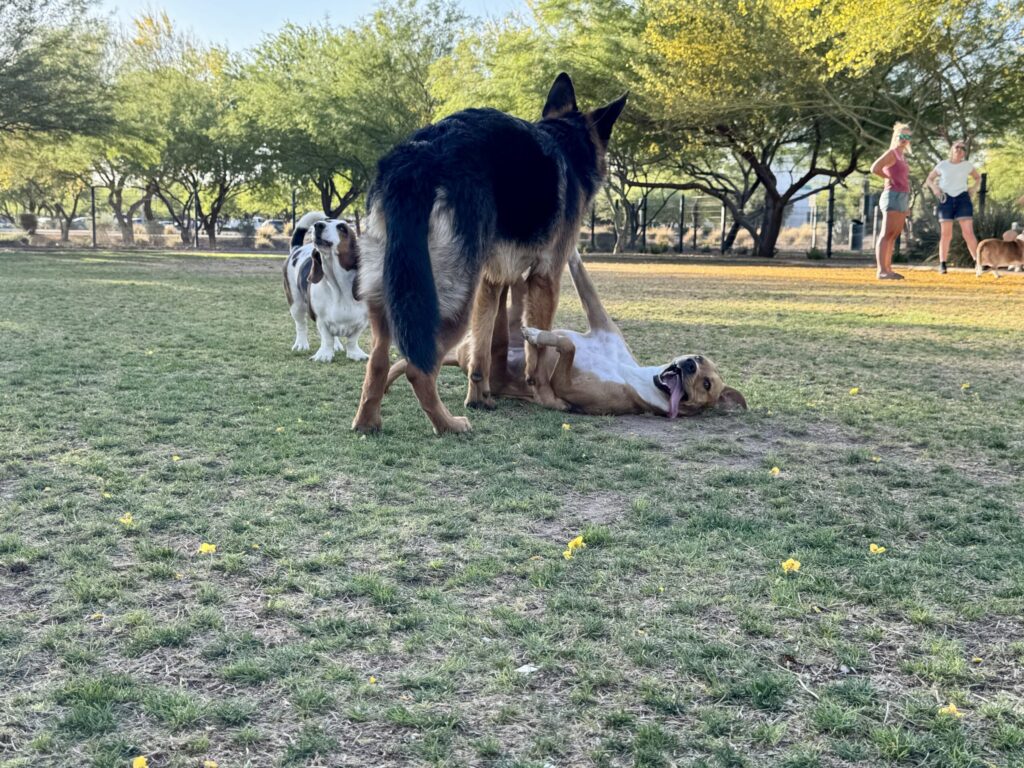
High‑energy but consensual dog play. Loose bodies and open mouths signal comfort. However, a dog belly up with paws pushing out could be a signal to reduce the play energy. Molly, the Basset Hound, watches from a short distance and lets out a howl, adding her own commentary to the interaction.
Social hierarchies also influence communication, with dominant and submissive behaviors shaping interactions within groups. However, modern research emphasizes the fluidity and context-dependence of these hierarchies rather than rigid dominance structures. Recognizing the nuances of canine social communication helps owners and trainers foster healthier relationships and reduce behavioral issues.
I often point out when a dog gently sniffs the ground from a distance of other dogs. For example, when a dog enters a dog park, they will often gently sniff the ground near unknown dogs. This behavior says, “I’m cool. I’m just another dog doing regular dog stuff over here. If you guys are cool, I’ll come say hi in a second.”
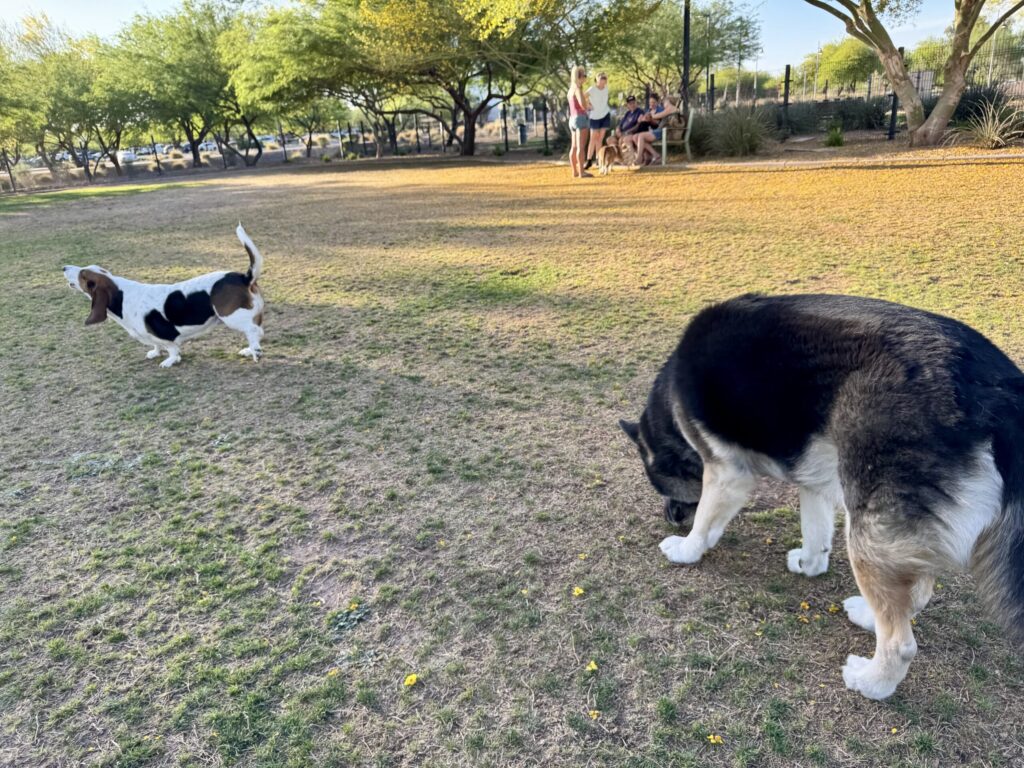
Jordan, a female German Shepherd, displays a ground‑sniffing calming signal. A subtle behavior dogs use to communicate low intent and reduce social tension.
I also emphasize the importance of not oversimplifying a dog’s state by limiting ourselves to only the words “Dominant” or “Submissive.” Dogs display an entire spectrum of behaviors that color their social interactions. For example, a dog can be cautious, lack confidence, and be anxious. Dogs can also be joyful, bold, and gregarious in off-leash group settings.
It’s important to give dogs frequent breaks when there’s a mismatch in personalities and energy levels. Sometimes shy dogs do better with smaller or less “bold” dogs. Conversely, it’s important to teach high-energy and gregarious dogs to respect other dogs’ boundaries and not be too “pushy” with dogs who aren’t ready to match their energy.
Dogs engage in chase, prey capture, and sexual behaviors when playing.
adam winston – dogs in our world
My Chow Chow, Roady, was a perfect example of these social nuances. At the dog park, Roady preferred to walk the large fence perimeter rather than join in the typical play. He welcomed friendly greetings but maintained his own pace and space, embodying the unique social style of ancient breeds. His behavior reminds us to respect individual dogs’ preferences and energy levels to foster positive interactions.
For readers interested in learning more, check out the Fieldnotes episode “Dogs and Wolves.” In it, Erik Wilber explains how the researcher who originally introduced the term “alpha” later rejected its use for domesticated dogs, and even for wild wolves.
Practical Applications for Owners and Trainers
Understanding your dog’s communication is like having a secret decoder ring for their feelings and needs. When you can spot signs of stress, affection, or social cues, you’re better equipped to respond in ways that build trust and cooperation, making training smoother and life happier for both of you.
Here are three ways to put this knowledge into action:
Reading Stress and Comfort Signals
Learn to spot subtle cues that reveal how your dog feels in real time. Yawns, lip licks, and avoidance aren’t misbehavior—they’re communication. Recognizing these signals helps you ease tension, prevent frustration, and build trust during training or social situations.
For example, if your dog starts to avoid eye contact or yawns during a session, it’s a good cue to pause and let them relax. This can prevent stress from escalating into unwanted behaviors.
Building Connection Through Communication
Reward calm, clear communication and encourage gentle eye contact to strengthen your bond. When you respond to your dog’s signals with empathy, you’re not just training—you’re building a relationship based on understanding and respect.
Applying Communication in Real Life
Practice reading your dog’s signals in everyday moments—during walks, greetings, or play. Respond calmly to stress cues and reward relaxed, confident behavior. These small adjustments build trust and prevent problems before they start.

“Izzy,” a rescued mixed‑breed dog, takes a self‑directed water break to regulate her arousal during play with her bold German Shepherd partner — a great example of dogs using natural pauses to manage social energy.
These practical steps help you tune into your dog’s unique personality and communication style, making your relationship richer and your training more effective.
Practicing real‑life scenarios with the dog in your world helps both of you tune into these signals and prevent problems before they start. By responding early and building in moments of connection, you reduce stress and fear while strengthening trust and confidence.
By learning to read your dog’s language, you’re not just training commands, you’re building a relationship based on understanding and respect.
Myth-Busting Common Misinterpretations
Despite widespread beliefs, many common interpretations of canine communication are inaccurate or oversimplified. For example, not all tail wagging signals happiness; the direction, speed, and context matter greatly. Similarly, the dominance theory has been largely debunked in favor of understanding social dynamics as fluid and context-dependent.
This section clarifies these common myths by sharing current science and explaining why some old ideas stick around even when they don’t hold up. Misreading dog signals can lead to confusion and training mistakes, so it’s important to get it right.
Key myths to bust:
By understanding these myths and the science behind canine communication, owners and trainers can approach their dogs with greater empathy and effectiveness.
By busting these myths, you’ll be able to understand your dog’s language with more accuracy and kindness, making your training and relationship stronger.
Conclusion
Decoding canine communication is a vital step toward building deeper, more empathetic relationships with the dogs in our world. By attentively observing and understanding their subtle signals, owners and trainers can enhance their dogs’ welfare, improve training outcomes, and foster lasting bonds rooted in trust and respect.
For readers inspired to keep exploring, the Fieldnotes Hub offers a growing library of science‑based articles, podcast episodes, and practical guides designed to deepen your understanding of dogs and the world they live in.
Thank you for being part of this exploration into the rich and fascinating language of canine communication. Your mindful attention and compassionate care truly make a meaningful difference in your dog’s life and well-being.
Frequently Asked Questions
Look at the whole body, not a single signal. Excitement usually comes with loose muscles and open mouths; stress often brings stiffness, tucked tails, or avoidance.
It’s a calming signal — a polite way to say “I’m friendly and not a threat.”
No. Growling is communication. Some dogs growl during play. Context and body language tell you whether it’s playful or stressed.
No. Gentle eye contact builds connection and focus. Only hard, prolonged staring can be a threat.
Watch for signs like turning away, slowing down, sniffing the ground, or taking a water break. These are self‑regulation signals.
Yes. Primitive/ancient breeds often show fewer obvious signals and rely on subtle cues. Understanding their “dialect” prevents misunderstandings.
Oversimplifying. Dogs aren’t “dominant” or “submissive” — they’re complex, emotional animals with a wide range of social behaviors.

Adam Winston
Dog Trainer • Animal Behaviorist • Science Communicator
Adam is the founder of Dogs in Our World, where he blends science, storytelling, and compassion to help people understand the dogs they love. His work focuses on fear‑based behavior, trust‑building, and the emotional lives of dogs and their humans.
If you’re navigating behavior challenges or want personalized guidance, Adam offers private sessions, AKC evaluations, and education‑focused consultations.




Great info from obviously a very knowledgeable and caring author? A must read!!
Thank you so much, Dave. I really appreciate you taking the time to read it. My goal is always to make canine communication clearer and less mysterious for people, so it means a lot to hear that it resonated with you.