How the COVID-19 Pandemic Changed Dog Behavior: Insights and Practical Guidance
Introduction
The COVID-19 pandemic changed how people live, work, and connect with each other. These shifts didn’t just affect humans; they also had a big impact on the dogs in our world. As families moved to remote work, practiced social distancing, and adjusted their daily routines, dogs faced new experiences with interaction, socialization, and their environment that tested their ability to adapt and cope emotionally.
During the pandemic’s peak, many dogs spent more time than ever with their people, which disrupted their usual routines and social lives. This sudden increase in human presence brought both good moments and challenges, influencing dogs’ daily habits, social behaviors, and emotional well-being. Then, as restrictions lifted and people slowly returned to their previous routines, dogs encountered new challenges tied to changes in attention, social contact, and being alone.
Understanding these subtle and complex effects on dog behavior is important for pet parents, trainers, and animal behaviorists. While separation anxiety has gotten a lot of attention, the pandemic’s impact goes deeper, involving slow shifts in routine, social exposure, and emotional experiences that differ widely from dog to dog.
This article looks at these changes through scientific studies, real-life observations, and professional insights. It offers a clear picture of how pandemic lifestyle shifts have left lasting marks on dog behavior, emphasizing the need for personalized care and smart management as we all adjust to life after the pandemic.
By exploring long-term studies, recent surveys, and new trends, along with stories like that of “Gorbi,” my Bassett Hound, whose life was deeply shaped by pandemic-related rehoming. This article provides a thoughtful and balanced view. It highlights why we need to go beyond simple explanations and appreciate the complex ways dogs respond to changing human lives.
Insights from Key Research Studies
Longitudinal Study on Dog Behavior During the Pandemic (PMC10716918)
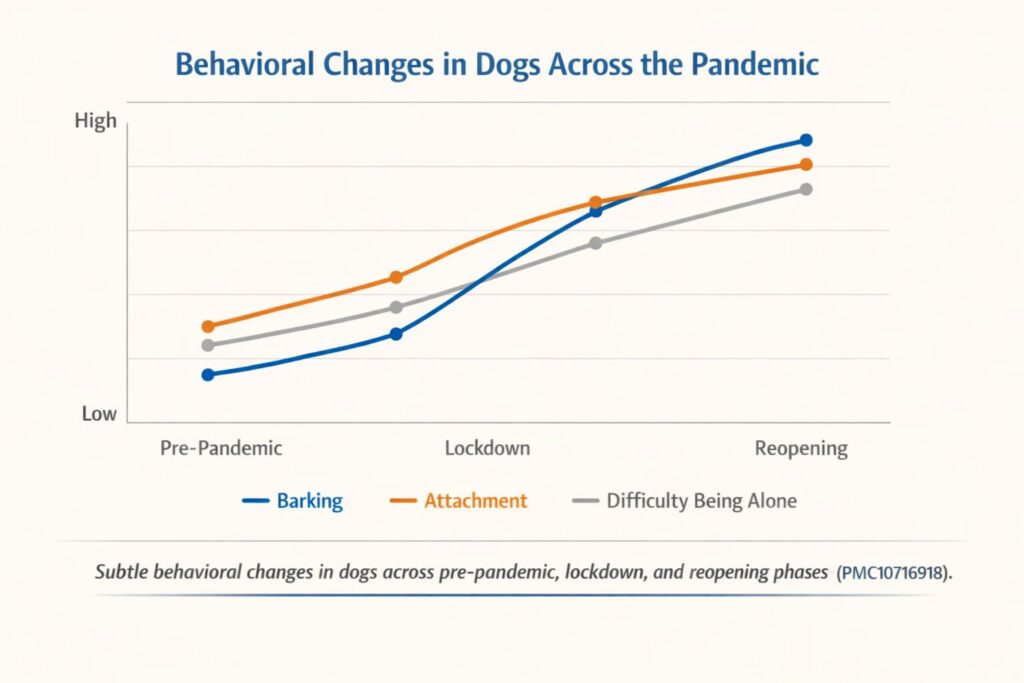
During the COVID-19 pandemic, a detailed study followed dog behavior through three key phases: before the pandemic, during lockdown, and as things started to reopen. The goal was to see how big changes in human routines affected dogs over time. The results showed that changes in dog behavior were subtle and not as straightforward as some might think.
One interesting finding was that dogs sleeping in their humans’ beds didn’t have much effect on behavior problems. This was different from cats, where sleeping outside the bedroom seemed to reduce issues. Instead, behaviors like trouble being alone, barking too much, and being overly attached were more connected to how much time dogs spent with their people at home.
Having kids around was linked to more barking, affirming that family presence can affect how dogs behave. Also, homes with several dogs had different behavior patterns compared to those with just one, suggesting that the social setup matters.
These results highlight that the pandemic changed dog behavior through small shifts in daily life, not big, sudden changes. It’s important to look at many lifestyle factors when thinking about how the pandemic affected dogs.
Personal observation: Gorbi, a young Bassett Hound who was rehomed to me post-pandemic, perfectly illustrates the challenges many “COVID Dogs” face. His life was deeply affected by the different phases of the pandemic.
Gorbi’s original family brought him home as a puppy after a COVID lockdown road trip across the country. During the lockdown, they had the time and freedom to enjoy their new furry family member. But as restrictions eased and life returned to normal, their routines shifted dramatically. The couple went through a breakup, and with their changing circumstances, they decided to rehome Gorbi, along with his original AKC breed paperwork.
When Gorbi arrived with me, he had never been to a veterinarian, had no collar or tags, suffered from untreated ear infections, and had overgrown nails that had never been trimmed. His behavior and health clearly reflected the upheaval and inconsistency many dogs experienced during this time.
Gorbi’s story highlights the real-world impact of pandemic lifestyle changes on the dogs in our world. It underscores the importance of patient, individualized care and a deep understanding of each dog’s unique journey through these challenging times.

Gorbi, my post‑pandemic “COVID Dog,” is shown here curled up with his favorite cat companion, soaking in the sunlight streaming through the window. Their quiet moment together reflects the emotional resilience many dogs developed during the pandemic, as well as the comfort they found in familiar relationships while navigating disrupted routines and changing environments.
Subtle Behavioral Changes Linked to Caregiver Lifestyle Shifts (MDPI 2023 Study)
A 2023 survey looked at dog behavior before, during, and after COVID, focusing on signs of separation anxiety. It found that behaviors like trouble being alone, barking too much, and being overly clingy were linked to changes in how much time dogs spent with their caregivers. This was regardless of whether there were kids in the home, and how many dogs lived there.
These changes were small but noticeable, coming from slow shifts in daily routines rather than sudden behavior changes.
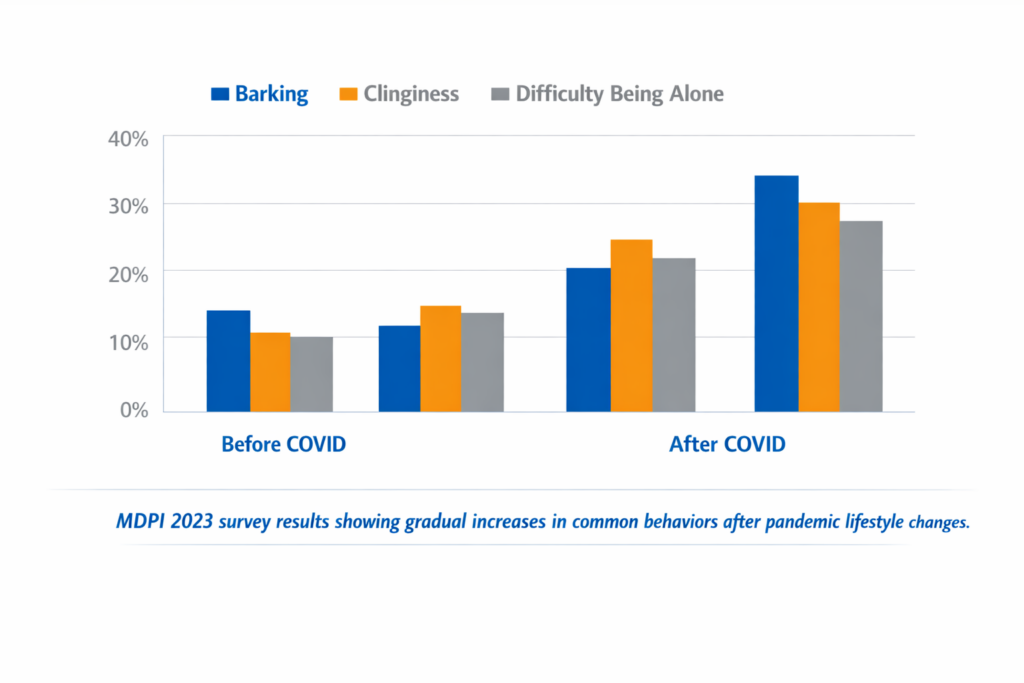
Insights from the Country Inn Pet Resort and Spa, where I worked as a dog trainer and pack manager, support this. Tony MacFee, the owner, and I noticed a clear post-pandemic trend: many young adult “COVID Dogs” missed critical early socialization opportunities. These dogs often hadn’t experienced regular trips to pet stores or group puppy classes, and they missed becoming “Office Dogs” due to widespread work-from-home shifts. As a result, many were fearful and hesitant to join the pack, needing extra space and time before engaging comfortably with other dogs.
We also observed that these dogs required more frequent breaks during play because they hadn’t learned to manage their energy levels well. One memorable case was a large, unsocialized Rottweiler who needed special handling during grooming. Tony and I agreed that while these challenges are real, it remains the responsibility of canine guardians to provide proper training, socialization, exercise, and structure to help dogs thrive.
Post-Pandemic Behavior Issues and Trends
(AAHA 2024, BISAS, Frontiers in Veterinary Science)
After the pandemic, more dogs are showing separation-related problems as their caregivers return to old routines. These issues often come from irregular schedules, less exercise, and fewer opportunities to socialize with other dogs and people.
Caregivers are becoming more skilled at recognizing early signs of anxiety and behavior problems in their dogs. Spotting these subtle cues early allows for quicker intervention, which can prevent issues from worsening and supports more effective behavior management.
Also, during the pandemic, many shelter dogs were placed in foster homes instead of kennels. This quieter environment helped reduce stress and made it easier for dogs to find forever homes. Research shows that fostering can lower stress hormones and increase restful behavior in shelter dogs, improving their well-being and adoption outcomes. This shift in shelter practices during the pandemic represents a positive change for dog welfare.
Together, these studies show that pandemic-related dog behavior is complex and changing. They remind us that care and training need to be flexible and tailored to each dog’s unique experience and environment.
Filling the Gap: What Major Sources Miss
Many popular dog behavior resources focus mainly on common issues like separation anxiety, often missing the unique context of the COVID-19 pandemic. This leaves a significant gap in understanding how the slow but meaningful lifestyle changes during the pandemic have shaped dog behavior over time.
Few sources explore the detailed, long-term effects of these shifts—such as how gradual changes in daily routines, caregiver presence, and household makeup influence specific behaviors. For example, having children at home or living with multiple dogs can affect barking, attachment, and social skills in nuanced ways that are rarely discussed.
Because of this, many canine guardians and trainers might overlook important factors contributing to new behavior challenges emerging in the years following the pandemic. Highlighting these research gaps can empower caregivers to develop deeper insights and more personalized strategies to support their dogs’ well-being in today’s evolving world.
This article aims to fill that gap by spotlighting these often overlooked details. It promotes a more comprehensive view that considers the complex interplay of environmental, social, and emotional influences shaped by the pandemic.
Understanding these subtleties is essential for crafting training and care plans that genuinely reflect the lived experiences of dogs and their caregivers in a post-pandemic world. This approach not only enriches scientific discourse but also provides practical guidance for those caring for and working with dogs.
Many major sources overlook how slow, everyday lifestyle shifts during the pandemic reshaped dog behavior in lasting ways.
adam winston – dogs in our world
Practical Guidance for Dog Owners and Trainers
Managing dog behavior in the wake of pandemic lifestyle shifts requires a thoughtful, individualized approach that respects each dog’s unique experiences and temperament. Separation anxiety and attachment behaviors, which became more pronounced during extended periods of caregiver presence, can be effectively addressed through consistent routines and gradual adjustments designed to rebuild confidence and emotional resilience. One tool I use to help clients with separation anxiety is the AKC Canine Good Citizen (CGC) Supervised Separation test item preparation, which assesses a dog’s ability to stay calm and well-behaved when left with a trusted person for a short time.
Establishing predictable daily schedules is foundational. Dogs thrive on routine, so maintaining regular feeding times, walks, play sessions, and rest periods helps restore a sense of security and normalcy. Caregivers should carefully reintroduce alone time by starting with brief absences and progressively increasing duration, allowing dogs to adjust without overwhelming stress.
Environmental enrichment plays a critical role in supporting emotional well-being. Incorporating puzzle toys, scent games, and varied physical exercise not only reduces anxiety but also prevents boredom-related behaviors that can emerge when dogs are under-stimulated. Mental stimulation encourages problem-solving and engagement, which are vital for dogs adapting to changing household dynamics.
Mindful observation is essential. Each dog responds differently to changes, so caregivers and trainers should avoid one-size-fits-all solutions. Paying close attention to individual behavioral cues enables tailored strategies that address specific needs, whether that involves additional calming techniques, increased socialization, or modified exercise routines.
Professional support from qualified trainers or behaviorists can be invaluable, especially for dogs exhibiting severe anxiety or fearfulness. Early intervention using positive reinforcement fosters resilience and adaptability, helping dogs navigate transitions with greater ease.
Finally, fostering socialization opportunities in controlled, positive settings is crucial. Many dogs experienced reduced social exposure during pandemic restrictions, leading to social deficits. Gradual, positive interactions with people and other dogs help rebuild confidence and social skills, contributing to overall behavioral health.
By combining consistent routines, gradual adjustments, enriched environments, and truly individualized care, pet parents and professionals can continue supporting the dogs in our world. Especially those who grew up during the pandemic. Many of these “COVID‑era puppies” are now adults, and their experiences still shape how they navigate daily life. They deserve thoughtful consideration as we move through the ongoing transition to post‑pandemic living, ensuring their well‑being and strengthening the relationships we share with them.
Supporting dogs in a post‑pandemic world starts with consistent routines, gradual adjustments, and truly individualized care.
adam winston – dogs in our world
Conclusion
The COVID-19 pandemic brought subtle yet meaningful changes to dog behavior, shaped by shifts in human routines, social exposure, and emotional dynamics. These changes go beyond common assumptions, highlighting the complexity of canine responses to evolving lifestyles.
As owners and professionals navigate the post-pandemic world, it is essential to consider these nuanced factors in training, care, and management. Consistent routines, gradual adjustments, and individualized approaches can support dogs in adapting and thriving.
At Dogs in Our World, we are committed to helping you understand and support your canine companions through these ongoing changes. Whether you seek personalized training, behavior consultations, or educational resources, our services are designed to empower you and your dog for a harmonious life together.
I invite readers to share their experiences and questions in the comments section below. Help us foster a community of learning and support as we collectively understand and respond to the dogs in our world.
Frequently Asked Questions
The pandemic created subtle but meaningful shifts in dog behavior due to changes in human routines, social exposure, and emotional dynamics. Dogs adapted to increased caregiver presence and later struggled with the return to normal schedules.
Yes. Extended caregiver presence strengthened bonds but also disrupted routines, leading some dogs to develop attachment issues, difficulty being alone, or increased anxiety when routines changed again.
Research showed that behavior changes were gradual rather than dramatic. Factors like time spent with caregivers, household composition, and daily routine shifts influenced barking, attachment, and independence.
According to the study cited in the article, dogs sleeping in their humans’ beds did not significantly contribute to behavior issues, unlike findings in cats.
“COVID Dogs” are dogs who grew up during lockdowns and missed key socialization experiences such as puppy classes, public outings, and exposure to new environments. Many show fearfulness or hesitation in social settings.
As caregivers returned to work or resumed busier schedules, dogs faced reduced attention, less social contact, and more alone time, which contributed to separation‑related behaviors and stress.
Small shifts—like altered work schedules, more time at home, or changes in household activity—were linked to behaviors such as barking, clinginess, and difficulty being alone.
Trainers reported that many young adult dogs lacked early socialization, struggled with energy regulation, and needed more time and space to feel comfortable around other dogs and people.
Yes. More dogs were placed in foster homes instead of residing in shelter kennels, reducing stress and improving adoption outcomes. Research shows fostering can lower stress hormones and increase restful behavior.
Separation‑related problems, anxiety, reduced social skills, and difficulty adjusting to routine changes became more common as households transitioned back to pre‑pandemic lifestyles.
Consistent schedules, gradual reintroduction of alone time, environmental enrichment, and positive reinforcement can help dogs rebuild confidence and adapt to new routines.
If a dog shows persistent anxiety, fearfulness, or escalating behavior issues, support from a qualified trainer or behaviorist can provide tailored strategies and early intervention.

Adam Winston
Dog Trainer • Animal Behaviorist • Science Communicator
Adam is the founder of Dogs in Our World, where he blends science, storytelling, and compassion to help people understand the dogs they love. His work focuses on fear‑based behavior, trust‑building, and the emotional lives of dogs and their humans.
If you’re navigating behavior challenges or want personalized guidance, Adam offers private sessions, AKC evaluations, and education‑focused consultations.