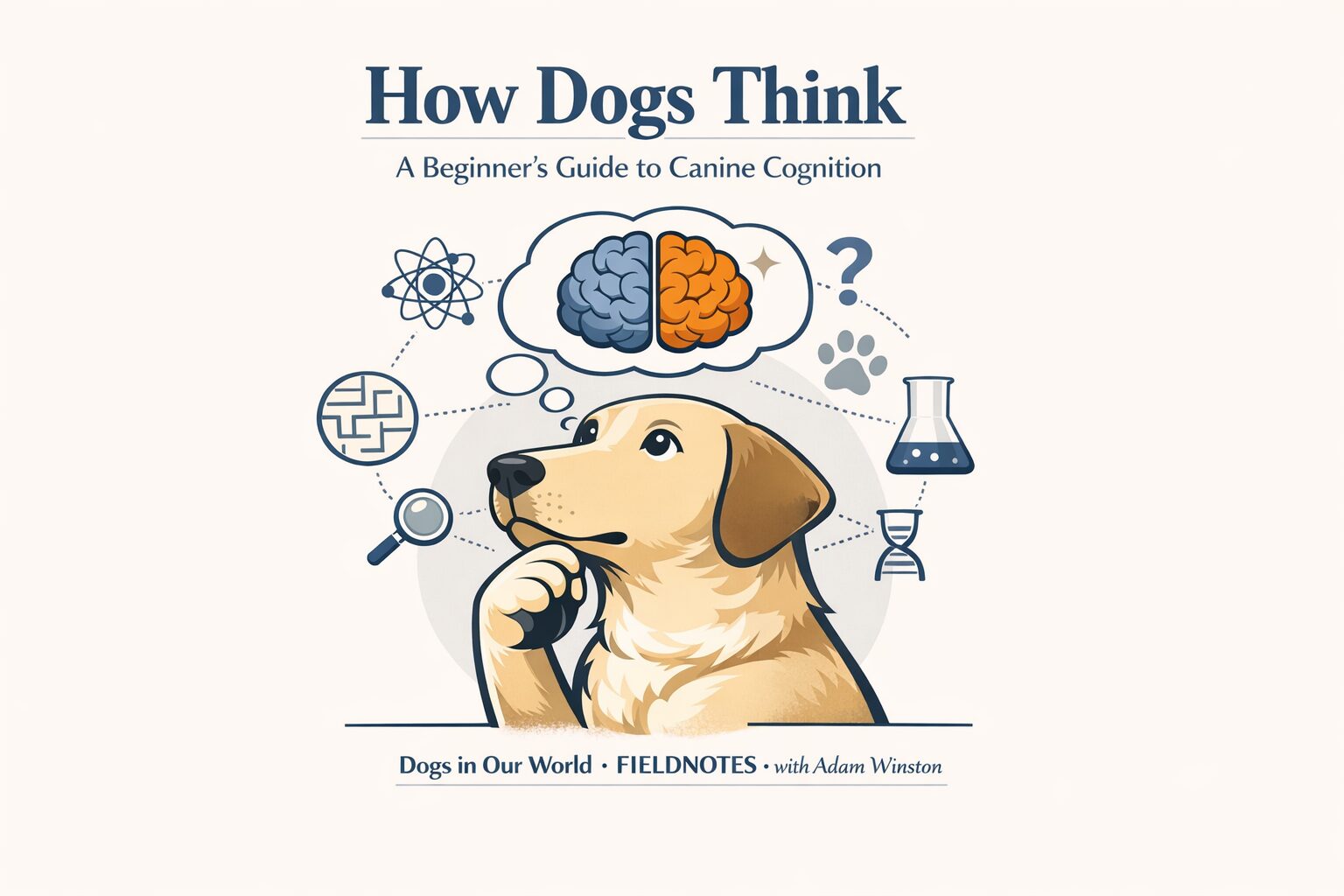
How Dogs Think: A Beginner’s Guide to Canine Cognition
Introduction: The Hidden World Inside Your Dog’s Mind
Dogs often surprise us with moments that seem to reveal a deeper thought process — a pause at a doorway, a curious head tilt, or a sudden hesitation during training. These behaviors aren’t random reactions; they hint at the rich inner world of canine cognition. Simply put, canine cognition refers to the mental processes dogs use to perceive, think, and understand their environment.
This article serves as a beginner’s guide to how dogs think, designed to be accessible and engaging rather than a dense scientific paper. By exploring the hidden workings of your dog’s mind, you’ll gain insights that can transform how you train, communicate, and build a stronger bond with your furry companion.
What Is Canine Cognition?
Canine cognition refers to the mental processes dogs use to learn, solve problems, communicate, and navigate their environment. It encompasses how dogs perceive sensory information, remember past experiences, experience emotions, and make decisions. Understanding these processes helps us appreciate the complexity of a dog’s inner world beyond simple obedience.
Major domains of canine cognition include perception, memory, emotion, problem-solving, social cognition, and learning. Each domain plays a crucial role in how dogs interact with their surroundings and with humans. For example, social cognition allows dogs to interpret human gestures and emotions, while problem-solving skills help them navigate challenges.
A common misconception is equating cognition with obedience. Cognition is about mental processing and understanding, not just following commands. Recognizing this distinction can improve how we train and relate to our dogs, fostering deeper communication and empathy.
A common misconception is equating cognition with obedience.
Adam Winston – Dogs in our world
How Dogs Perceive the World
Sensory Systems
Dogs experience the world through a rich tapestry of senses, each contributing uniquely to their perception. Their vision is tuned to detect motion more than fine detail or a broad color spectrum, allowing them to notice subtle movements that might escape human eyes. While dogs see fewer colors, they excel at recognizing faces and expressions, helping them connect socially.
Their sense of smell is truly extraordinary — often called an olfactory superpower. Dogs use scent as a primary source of information, gathering details about other animals, people, and their environment. This scent-based perception shapes much of their behavior, from tracking to social interactions.
Hearing in dogs covers a wider frequency range than in humans, enabling them to detect high-pitched sounds and emotional tones in voices. This sensitivity helps them respond to subtle cues in their surroundings.
Touch is another vital sense, especially social touch. Dogs use gentle pressure and contact to communicate comfort, reassurance, and bonding.
How perception shapes behavior
Understanding how dogs perceive their world explains many common behaviors. When dogs seem to “ignore” commands, it’s often because their senses are overwhelmed or distracted by stronger stimuli. Sniffing isn’t stalling; it’s active thinking and information gathering. Visual and scent cues often carry more meaning for dogs than spoken words, highlighting the importance of body language and environment in communication.
By appreciating these sensory priorities, owners can better interpret their dog’s actions and foster clearer, more empathetic interactions.
Emotion: The Heart of Canine Cognition
What we know from research
Research shows that dogs experience core emotions such as fear, joy, anger, disgust, and interest. More recent studies suggest they may also feel more complex emotions like jealousy and empathy, indicating a deeper emotional life than previously understood.
Emotional states influence thinking
A dog’s emotional state significantly impacts its cognitive abilities. Stress can narrow a dog’s focus and limit problem-solving skills, while feelings of safety and comfort expand their capacity to think and learn. What often appears as stubbornness is frequently a sign of emotional overload, where the dog’s brain is overwhelmed and unable to process commands effectively.
Real-world examples
Consider the dog at the park who seems to ignore commands; this behavior often stems from emotional distraction rather than defiance. Similarly, a dog that shuts down during training may be experiencing stress or fear, which inhibits its ability to engage and learn. Recognizing these emotional influences helps owners respond with empathy and adjust their approach to support their dog’s emotional well-being.
Memory: How Dogs Learn From the Past
Types of memory
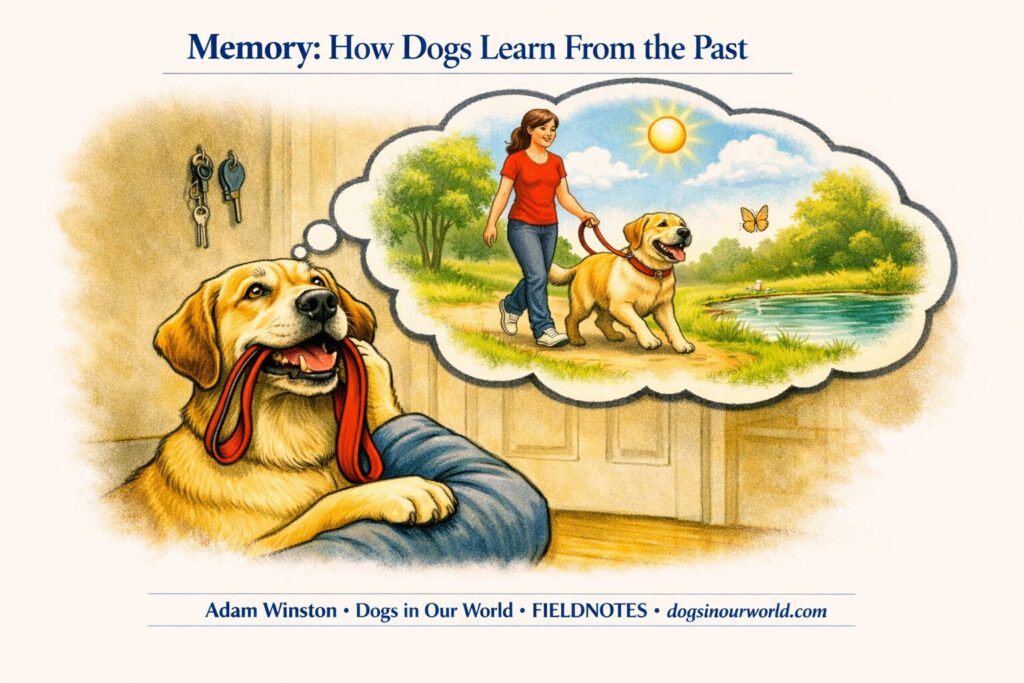
Dogs possess several types of memory that shape their behavior and learning. Associative memory allows them to link specific cues or events with outcomes, such as associating a leash with a walk. Episodic-like memory refers to their ability to recall past experiences in a way that influences current decisions, though it is not as detailed as human episodic memory. Social memory helps dogs remember individuals and social interactions, which is crucial for their relationships with humans and other animals.
How memory affects behavior
Memory plays a vital role in why dogs remember routines and commands when consistently practiced, but may forget cues if training is inconsistent. Emotional events, such as a frightening experience or a joyful play session, tend to be remembered vividly, influencing future reactions and behavior. This emotional memory helps dogs navigate their environment safely and form strong bonds.
Myth-busting
A common myth is that dogs feel guilt like humans do. In reality, what we interpret as guilt is often a dog anticipating the consequences of their actions based on past experiences, not a moral judgment. Understanding this distinction can improve how we respond to and train our dogs, fostering clearer communication and stronger relationships.
Problem-Solving and Decision-Making
How dogs approach challenges
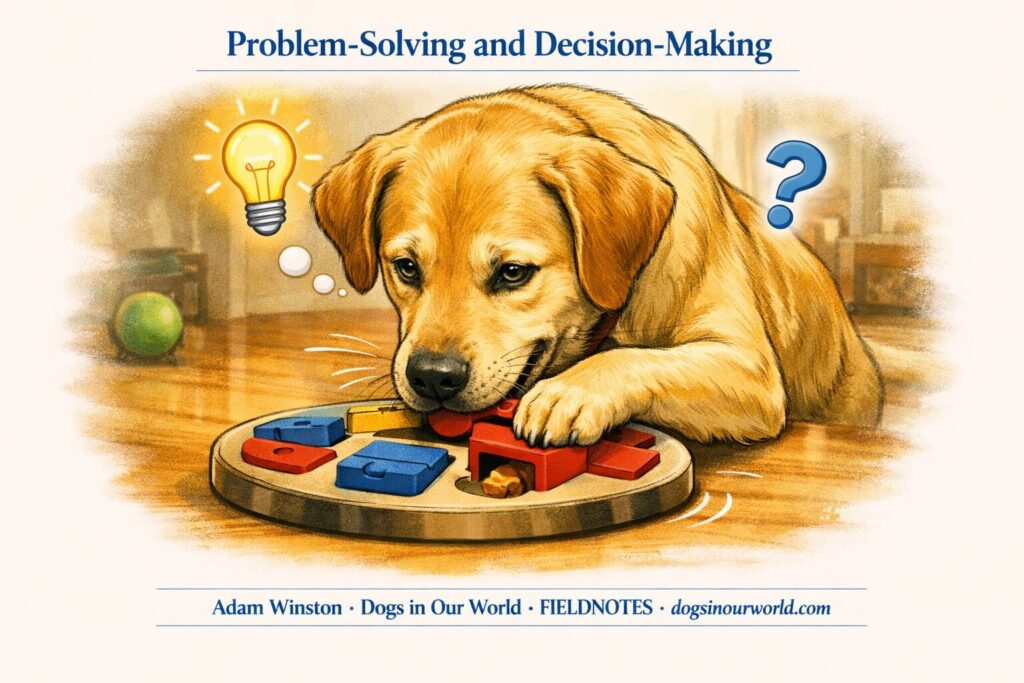
Dogs use a variety of strategies to solve problems, often relying on trial and error to find effective solutions. They observe patterns in their environment and learn from repeated experiences, which helps them anticipate outcomes and make better decisions over time. Human guidance also plays a crucial role, as dogs can learn to solve problems more efficiently when supported by clear cues and encouragement.
Examples
Common examples of canine problem-solving include figuring out puzzle toys designed to challenge their minds, navigating unfamiliar environments by using sensory information and memory, and learning household rules such as where to go for bathroom breaks or how to wait patiently for meals.
Cognitive limitations
It’s important to remember that dogs are not small humans; their cognitive abilities are specialized but limited in certain ways. Overestimating a dog’s problem-solving skills can lead to frustration for both the dog and owner. Understanding these limitations helps set realistic expectations and fosters more effective training and communication.
Social Cognition: Dogs as Human Specialists
Dogs evolved to read humans
Dogs have evolved remarkable abilities to read and respond to human social cues. Eye contact plays a crucial role in this connection, allowing dogs to gauge our attention and intentions. They also follow human gestures, such as pointing, to find hidden objects or understand directions. Emotional attunement enables dogs to sense our moods and adjust their behavior accordingly, strengthening the human-dog bond.
Why dogs understand us better than wolves
Research into domestication reveals that dogs have developed specialized cognitive skills that wolves lack. Through thousands of years of living alongside humans, dogs have become adept at cooperative communication, interpreting subtle human signals that facilitate teamwork and social harmony.
Real-world examples
In everyday life, dogs often “check in” with their owners during walks, seeking reassurance or guidance. They respond not only to the tone of our voice but also to our posture and facial expressions, demonstrating a sophisticated understanding of human emotional states and intentions.

Learning: How Dogs Build Skills and Understanding
Learning systems
Dogs build skills and understanding through several learning systems. Classical conditioning links a neutral stimulus with a meaningful event, such as associating a bell with mealtime. Operant conditioning involves learning through consequences, in which rewards or punishments shape behavior. Observational learning allows dogs to watch and imitate others, gaining new skills without direct experience. Emotional learning ties feelings to experiences, influencing how dogs respond to similar situations in the future.
Why reinforcement works
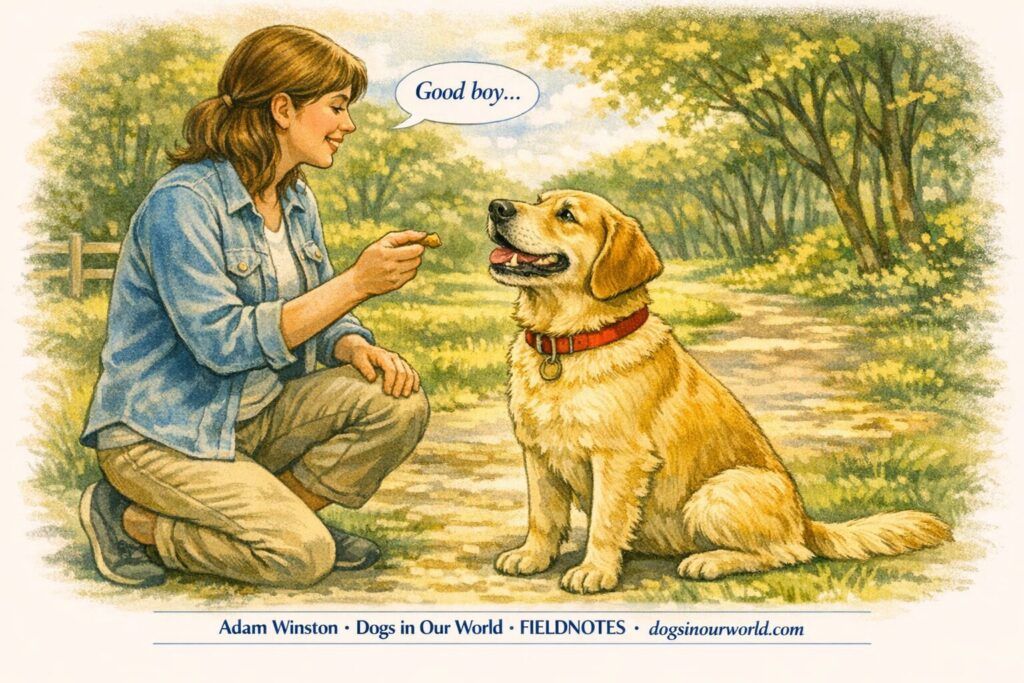
Reinforcement motivates dogs by creating predictable and safe environments where they can confidently explore and learn. Positive reinforcement strengthens desired behaviors by rewarding them, encouraging repetition. This approach taps into dogs’ natural motivation systems, making learning enjoyable and effective.
Why punishment fails
Punishment often induces stress and fear, which can lead to cognitive shutdown and hinder learning. When dogs feel threatened, their ability to process information and solve problems diminishes. This can result in avoidance behaviors, aggression, or confusion, undermining the training goals.
Understanding these learning principles helps owners foster a supportive environment that promotes skill-building and strengthens the human-dog bond.
Positive reinforcement strengthens desired behaviors by rewarding them, encouraging repetition.
Adam Winston – Dogs in our world
Intelligence: What It Really Means
The problem with “smart” vs “dumb” dogs
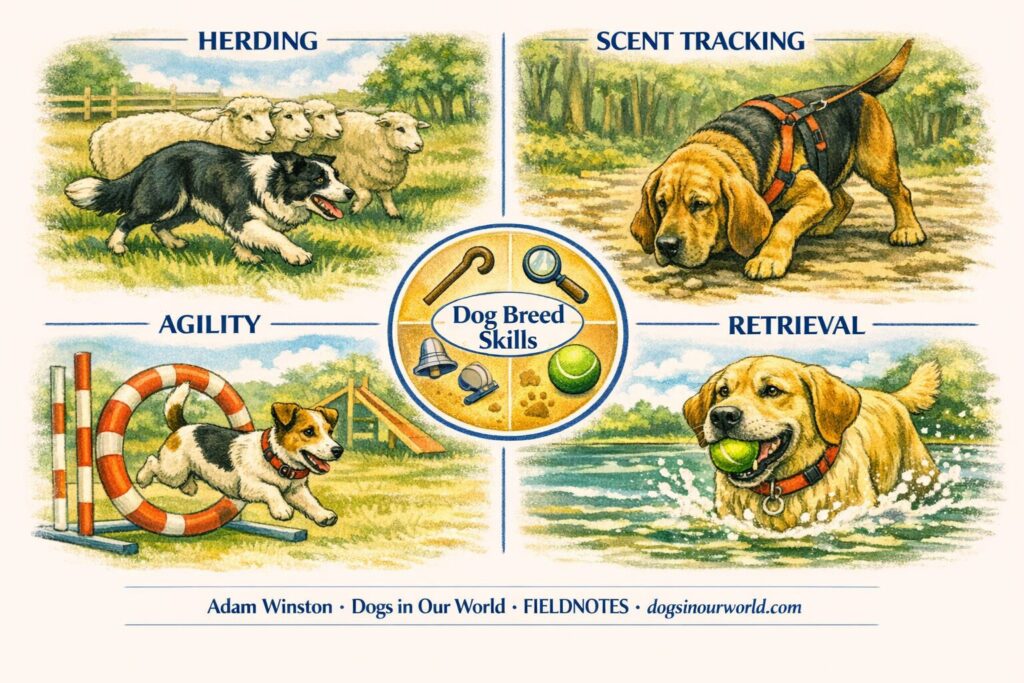
Intelligence in dogs is often oversimplified into labels like “smart” or “dumb,” which can be misleading and unfair. Breed stereotypes contribute to these misconceptions, but intelligence is far more nuanced. Dogs excel in different types of intelligence depending on their breed, training, and individual personality. For example, a Border Collie may shine in problem-solving tasks, while a Bloodhound excels in scent tracking.
What science actually measures
Scientific studies assess various aspects of canine intelligence, including memory, problem-solving abilities, social cognition, and adaptability. These measures highlight that intelligence is multifaceted and context-dependent rather than a single fixed trait.
Reframing intelligence
Rather than viewing intelligence as a test score, it’s more helpful to see it as a set of skills that vary by situation and individual. Your dog’s intelligence is shaped by their experiences, environment, and the tasks they face daily. This perspective encourages patience and appreciation for your dog’s unique strengths.
Practical Takeaways for Dog Owners
- Slow down and observe your dog’s behavior. Taking time to notice subtle cues can reveal what your dog thinks and feels.
- Support emotional safety by creating a calm, predictable environment. Dogs learn best when they feel secure and not overwhelmed.
- Reinforce curiosity and exploration. Encouraging your dog to investigate new things helps build cognitive skills and confidence.
- Break tasks into smaller, manageable steps. This approach aligns with how dogs process information and learn effectively.
- Use communication that matches canine cognition, such as clear body language, consistent cues, and positive reinforcement.
- Expect learning to be nonlinear. Progress may come in fits and starts, so patience and consistency are key to success.
These practical takeaways can help deepen your bond and make training a more positive, enriching experience for both you and your dog.
Conclusion: Seeing Your Dog with New Eyes
Dogs are not just companions; they are thinking, feeling beings with rich inner lives. Recognizing that dogs think, feel, remember, and solve problems opens the door to deeper empathy and more effective training. When we see our dogs through this lens, we move beyond simple commands to a true partnership built on understanding and respect.
This new perspective invites us to slow down, observe, and appreciate the unique ways our dogs experience the world. By embracing canine cognition, we strengthen the bond that makes our relationship with dogs so special and rewarding.

Frequently Asked Questions
Canine cognition refers to the mental processes dogs use to perceive, think, learn, solve problems, and understand their environment. It goes far beyond obedience and includes memory, emotion, social understanding, and decision‑making.
These behaviors are signs of active thinking. Dogs pause to gather sensory information, interpret cues, or make decisions based on what they perceive.
Not exactly. Dogs rely heavily on scent and motion detection, and they see fewer colors than humans. Their perception is shaped by smell, hearing, and subtle visual cues that guide their behavior.
Emotional states strongly influence cognition. Stress narrows focus and reduces problem‑solving ability, while safety and comfort expand a dog’s capacity to think, learn, and engage.
Research suggests they can. Dogs clearly experience core emotions and show behaviors consistent with more complex feelings such as jealousy, empathy, and social concern.
Dogs rely on associative memory to link cues with outcomes, episodic‑like memory to recall past experiences, and social memory to recognize individuals. These systems shape routines, training success, and emotional responses.
The “guilty look” is usually a response to human tone or body language. Dogs anticipate consequences based on past experiences, not moral judgment.
Dogs use trial and error, pattern recognition, and sensory information to navigate challenges. They learn more efficiently when humans provide clear cues, structure, and encouragement.
Through domestication, dogs evolved specialized social‑cognitive skills that allow them to read human gestures, eye contact, and emotional states far better than wolves can.
Positive reinforcement is the most effective approach. It builds confidence, strengthens desired behaviors, and supports emotional safety — all essential for learning.
Punishment creates stress and fear, which shuts down cognitive processing. This can lead to confusion, avoidance, or aggression rather than learning.
Different breeds excel in different types of intelligence. A Border Collie may shine in problem‑solving, while a Bloodhound excels in scent work. Intelligence is multifaceted, not a single score.

Adam Winston
Dog Trainer • Animal Behaviorist • Science Communicator
Adam is the founder of Dogs in Our World, where he blends science, storytelling, and compassion to help people understand the dogs they love. His work focuses on fear‑based behavior, trust‑building, and the emotional lives of dogs and their humans.
If you’re navigating behavior challenges or want personalized guidance, Adam offers private sessions, AKC evaluations, and education‑focused consultations.